There’s no doubt that the Neumann U47 is one of the most respected valve microphones ever made, been used to record the best vocals in the history of music. For this reason, lots of copies or variants have been built in the last 50 years, up to been recreated recently, even from one of its original manufacturers.
The hardest aspect to reproduce has always been the behaviour of the valve used, the Telefunken VF14, a military radio tube discontinued in the 60s (this caused Neumann to stop the production of this model) and very hard to find, until Telefunken reissued it under the name VF14K, a few years ago.
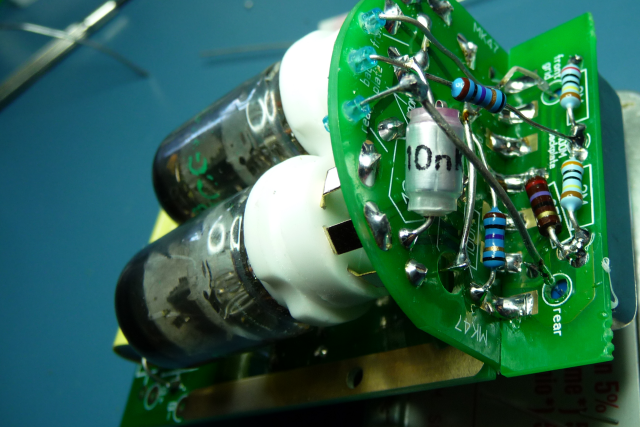
ioaudio MK-47 kit 01
I’m not a microphone expert, I only had built a pair of AKG C12 “clones” in the past, based on the Apex460 and made a few repairs of old micros, but absolutely wanted “that” sound and a tube microphone sounding different than my pair of DIY C12.
I found this project a few years ago on GroupDIY, while it still was called prodigy-pro.com and I liked the idea of using a pair of 6028 tubes to reproduce the VF14 and wanted to give it a try. Building a PSU and finding a microphone body hasn’t been really a problem, as in the same moment other builders had offers of kits for the ’47.
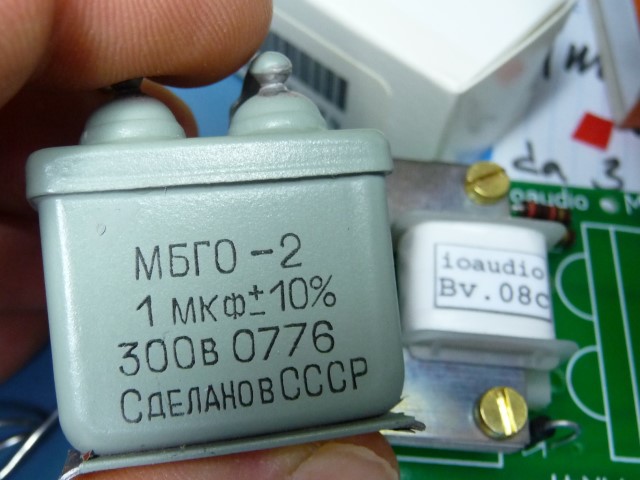
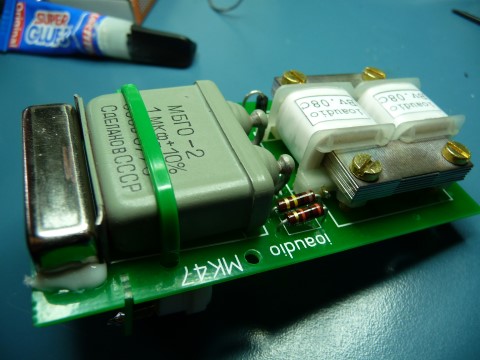
I remember opening the box, the kit’s more curious parts were the Soviet condenser with Cyrillic markings on it and the specially tailored transformer, reproducing the original Bv.08 trafo.
ioaudio MK-47 kit 02
I don’t remember the MK47 building to be difficult at all, all was explained very well in the MK47 Build Support thread of the groupDIY thread:
Max Kircher’s ioaudio is still building kits for vintage microphones, their actual kit is an upgrade to transform a U87 into a tube U67, something I would like to build, one day for my 87.
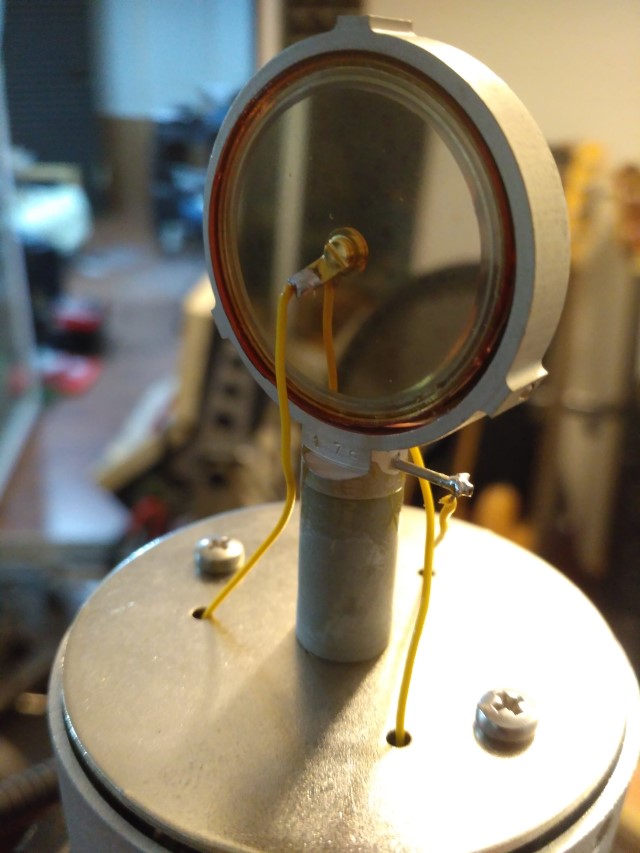
Thiersch STW7 Red capsule, front
As capsule I chose the Thiersch Elektroakustik, a perfect reproduction of the M7 capsule, with the membrane in two different flavors, PVC or PET (mine).
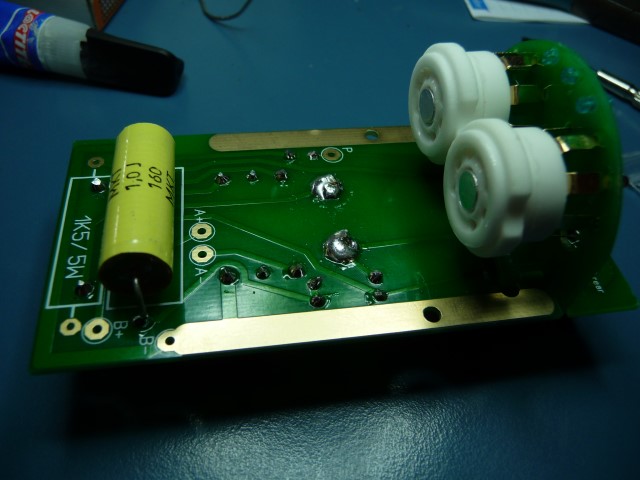
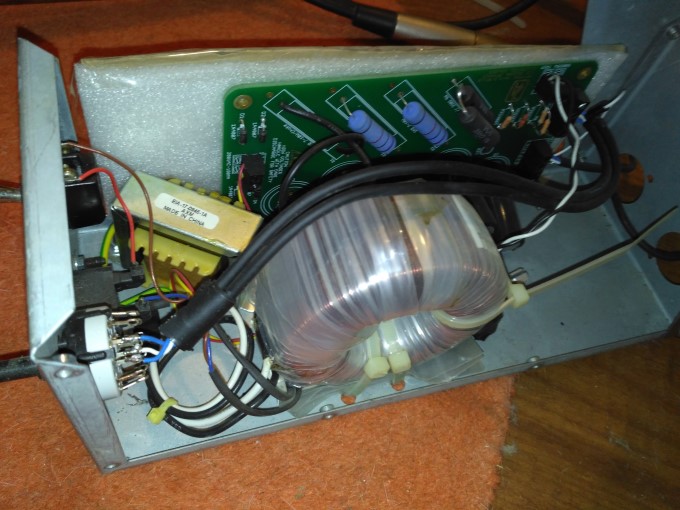
DIY U47 PSU
More tricky was building the power source, but I’ve been lucky to find a suitable pcb in Prodigy’s “White Market”.
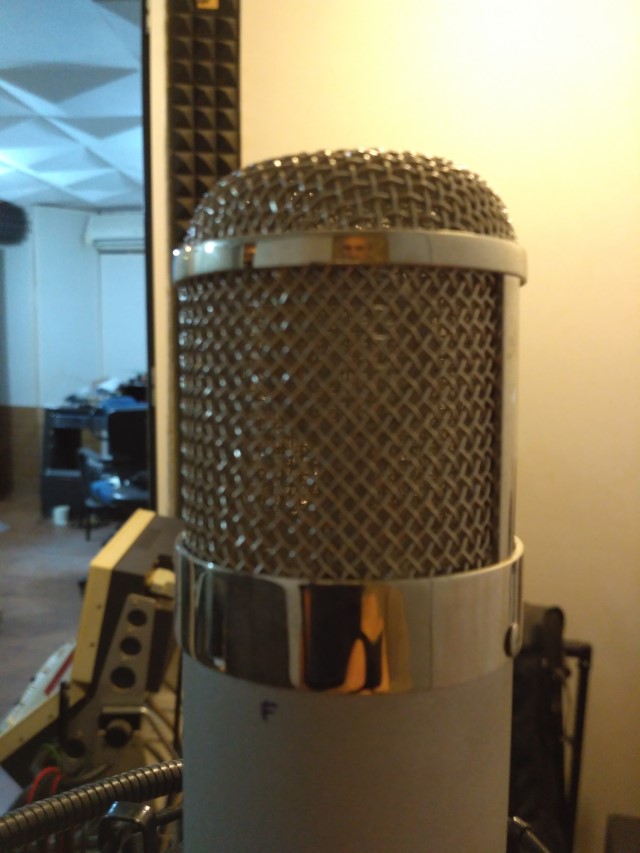
As body, I used the Equinox Systems copy of the U47 enclosure, very nicely done.
This remains up to today my preferred microphone in the studio, I use it mainly on voice.
Days ago I arrived to the conclusion that to import files from my production PC to the Mac in the studio, I needed a faster solution. Every time having to make dozens of bounces, was getting really too stressful. What I needed, was the possibility to open my Reason 10 projects started at home, in a Reason rewired to Pro Tools HD in the studio, having this way complete compatibility.
The first thing I tried to do, has been checking for a Pro Tools upgrade offer in my Avid account, but not surprisingly, on their upgrade program my old system was not even mentioned , being too old.
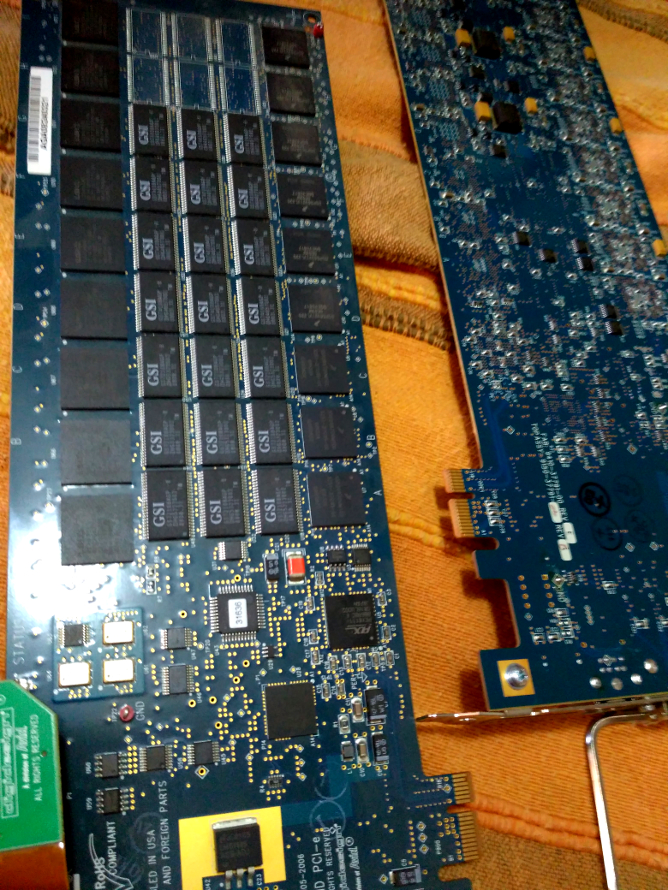
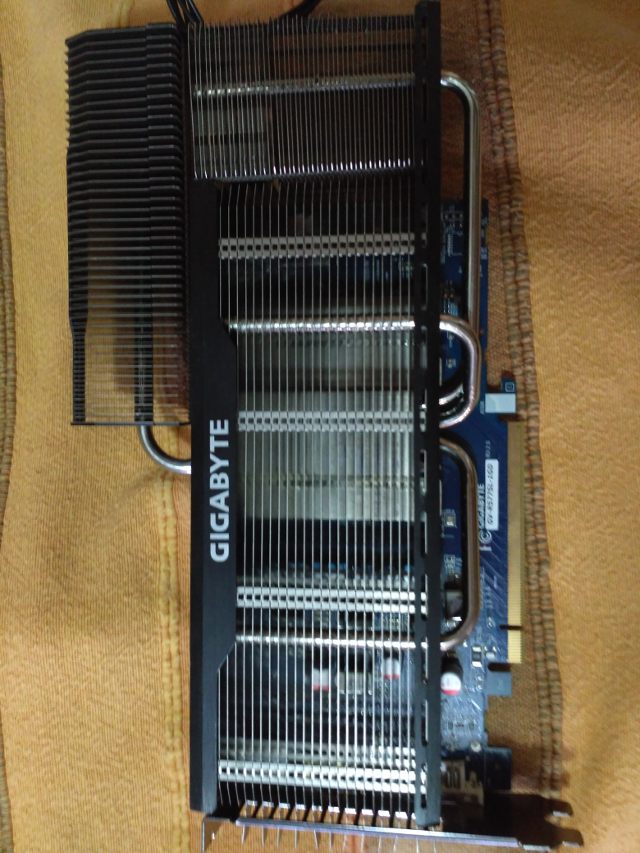
2006 Pro Tools HD TDM Core and Accel cardsATI HD5770 Silent found on eBay
Calling a friend and sharing my idea to update my old DAW to make run on it Reason 10, the answer of the guy, expert in computers and audio systems was something like “Max, you have a dinosaur there! What you want to upgrade? buy a new system, instead”
Even if his answer has its logic and didn’t surprised me, I couldn’t afford the cost for a new Avid audio card on a new Mac Pro and even more, I didn’t want, nor needed all that power. At the end, I was still satisfied with the zero latency and immediate reaction to commands of my old Pro Tools HD and the number of TDM plugins I can run there, are a lot more of what I ever needed, as I record real instruments and use external effects, most of the times. The problem was Reason not wanting to run in Rewire, being my Pro Tools architecture 32 bit, while this DAW from version 8.2, is 64 bit only and Reason is the platform where I like to compose more. I tried unsuccesfully a 64 bit to 32 simulator, but seems to work only in one direction, 32bit applications to run on 64bit hosts, not the opposite that is my case.
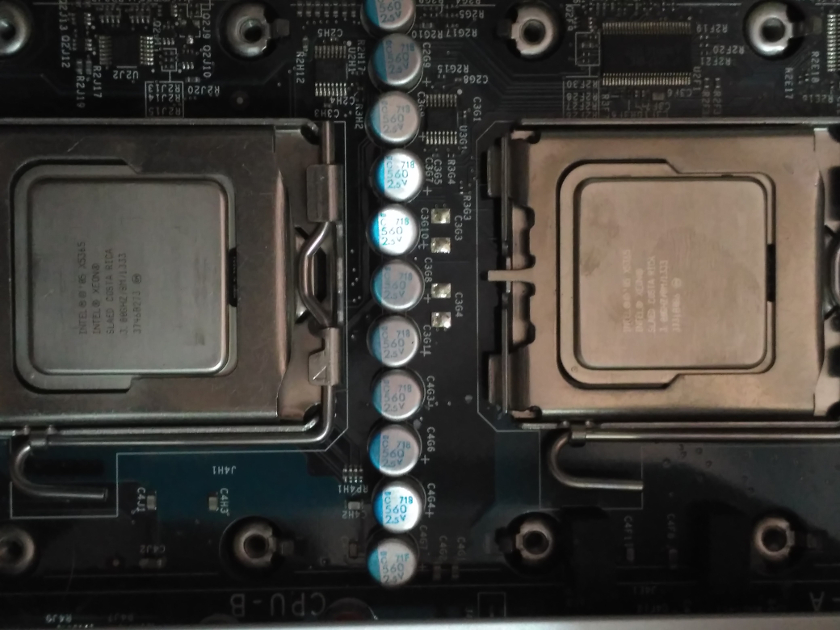
Mac Pro double processors without heatsink
Serching on internet, I found my Mac could, with a limited amount of money, partially being upgraded, at least to a certain point. What I needed were some more RAM, a new graphic card and a couple of faster Intel Xeon cores.
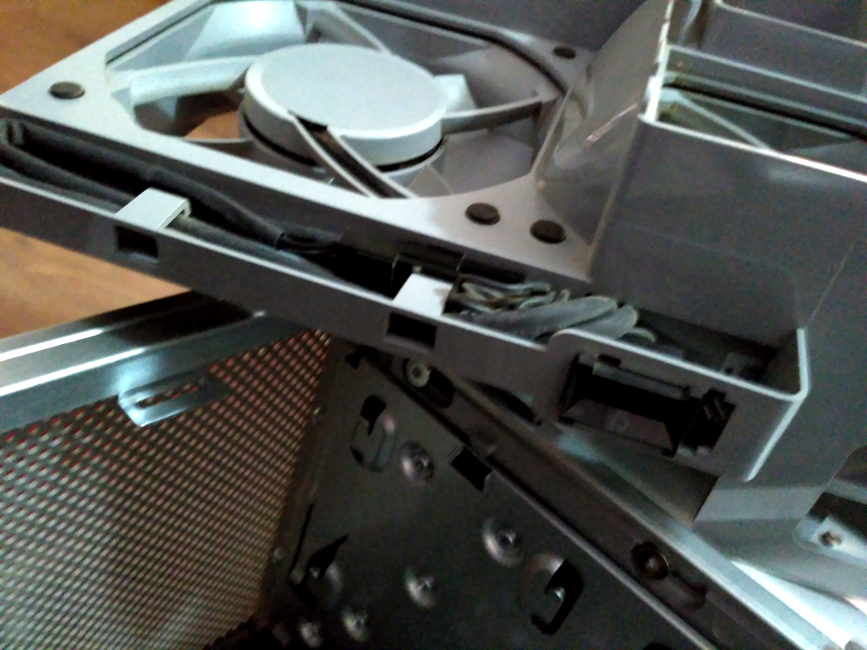
Cooling fan slot, the hardest part to remove
What was really an impossible task, at least to me, was having
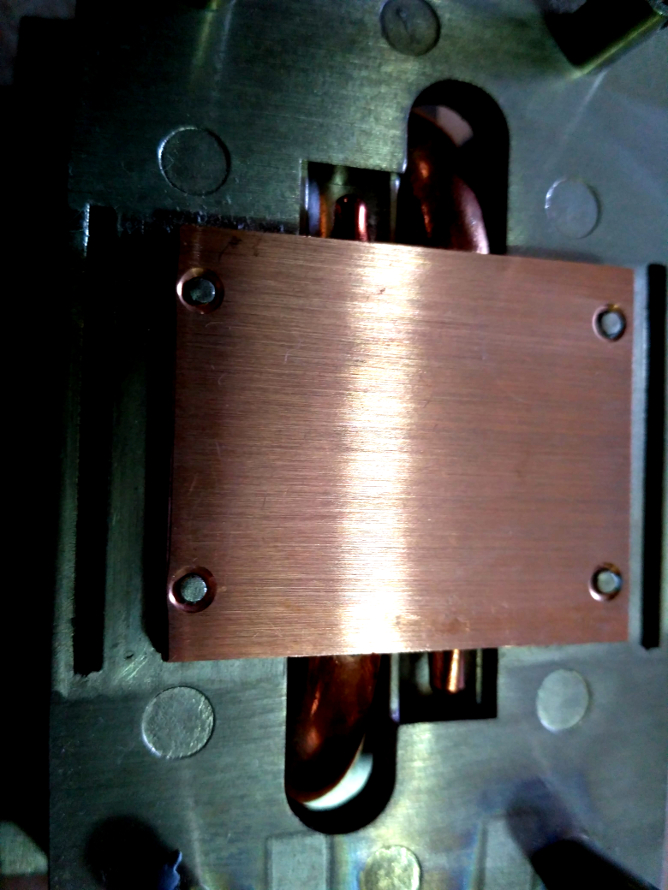
Heatsink plate polished with Isopropyl Alcohol
a Reason more recent than version 8.1, working in Rewire with my hardware Pro Tools.
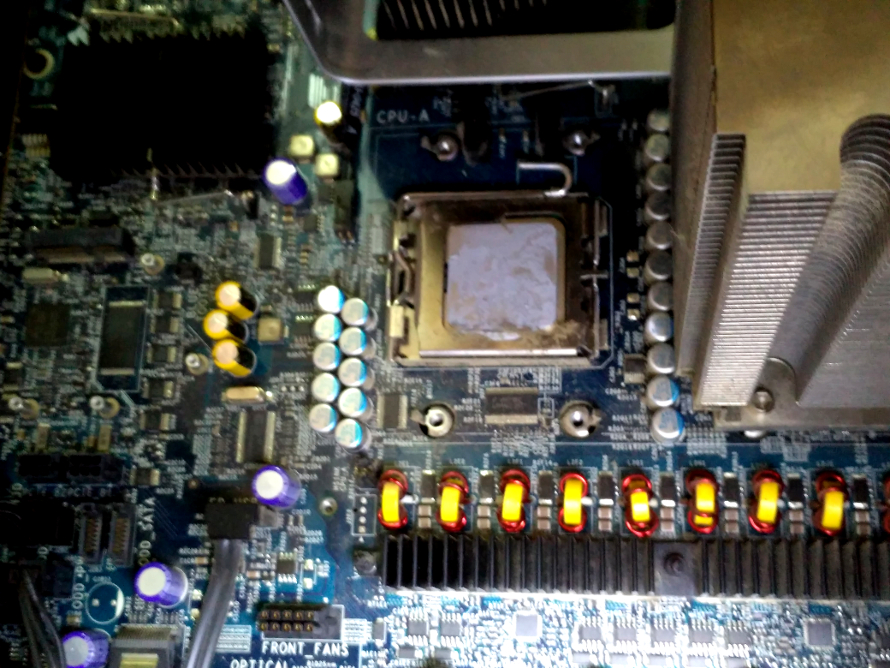
Intel Xeon core, once removed the heatsink
Unfortunately, a younger version of Reason Rewire in my system is impossible to make it run, it is not seen in the RTAS plugs list.
After a couple of weeks of trials and fails and lots of readings in specialized webs, I found a combi that works well for my machine:
Pro Tools HD 8.1, combined to Reason 8.1, perfect match even numerically! :D
Downgrading has been the only possibility to have complete compatibility. Using external gear, I can renounce to the last versions soft synths, the sacrifice is not that big using mostly real instruments.
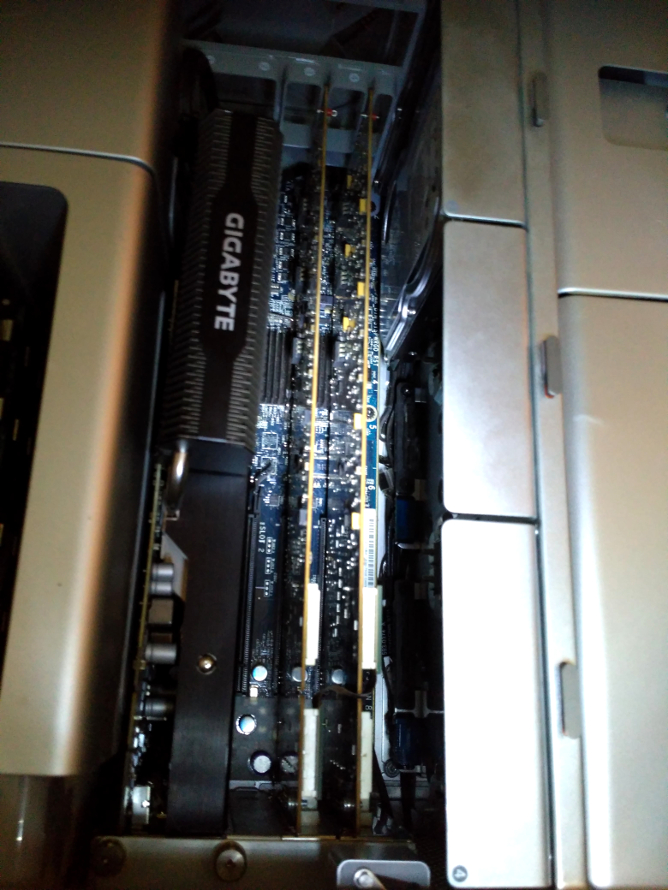
Pro Tools and ATI 5770 PCIe cards installed
The total cost of the operation, including delivery of the parts, has been 326.80 euros
179 eu used ATI HD5770 (needed to run with the upgraded processors)
55.80 eu used 16Gb memory upgrade
92 eu 2x used 3.0GHz Quad core processors
There’s plenty of information regarding the upgrading of a Mac Pro 1.1, so it doesn’t make sense to go deeper.
Unfortunately I couldn’t find any information online, regarding Pro Tools HD TDM compatibility with recent versions of Reason. Through downgrading of Reason to version 8.1.1 and having Pro Tools software version 8.1, the combination is very stable and hadn’t any crash or problems.
Updated February 27, 2026 Refreshed the English for smoother reading while preserving the original spirit, personal story, and technical details. Note on specs: The 72 dB dynamic range figure is quoted directly from the 1982 E&MM magazine article for this DIY project. In practice (with 1980s-era 8-bit ADC hardware and no advanced companding), real measured signal-to-noise often landed closer to 50–55 dB, giving the characteristic hiss and lo-fi charm that makes the Powertran so appealing today. Planning fresh OSO audio demos soon (e.g., freeze loops, beat repeater tests). Stay tuned!
I’m very excited to start writing about this delay processor — a piece that, I believe, deserves more words, as I couldn’t find much written on it. The reason it’s not popular isn’t its low digital resolution or high noise level, but simply because it was never produced in series.
The Powertran DDL came out in 1982 as a DIY project, published in the popular electronics magazine Electronics & Music Maker. As a result, only a small number of units were ever built. The project was developed by electronic designer Tim Orr, famous for his work on EMS synthesizers. The idea was to give wider access to the new digital technology, which until then had been extremely expensive and limited to big studios.
I’ve been lucky enough to have fun with three different Powertran units over the years, each one a bit different from the others. Being a DIY project, they all had some modifications, like optional CV/Gate or additional knobs/switches.
The first unit I had was borrowed — a friend kindly left his Powertran in the studio, and it stayed with me for several years. His music was more focused on acoustic instruments, so he wasn’t using it anymore. Those were times when a dirty digital sound wasn’t appreciated much, and only a few bit-reduction plugins like Digidesign Lo-Fi existed. My friend’s Powertran had voltage control too — samples could be played from a keyboard through a MIDI/CV interface — and its dirty 8-bit sound reminded me a bit of the Emulator that Paul Hardcastle used in “19”, a song I’ve loved so much. The Powertran became the crazy spice for almost anything experimental I was doing, until I moved the studio to another country and had to give it back.
My current Digital Delay was bought on eBay in a lucky bid a few years ago, as very few units were still around. Unfortunately, my second unit — bought in the UK in 1999 — died after a few years of use, and I couldn’t go without a DDL!
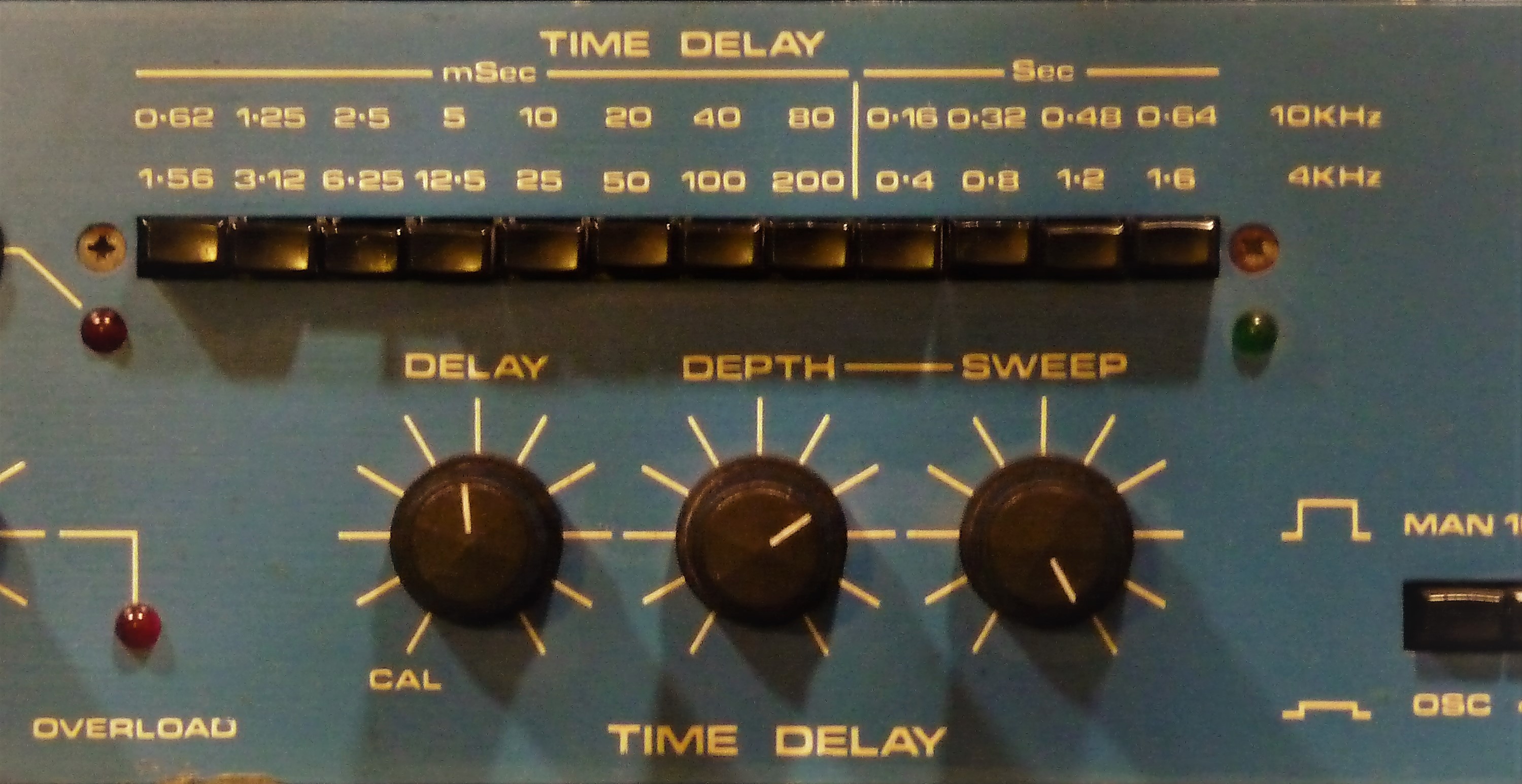
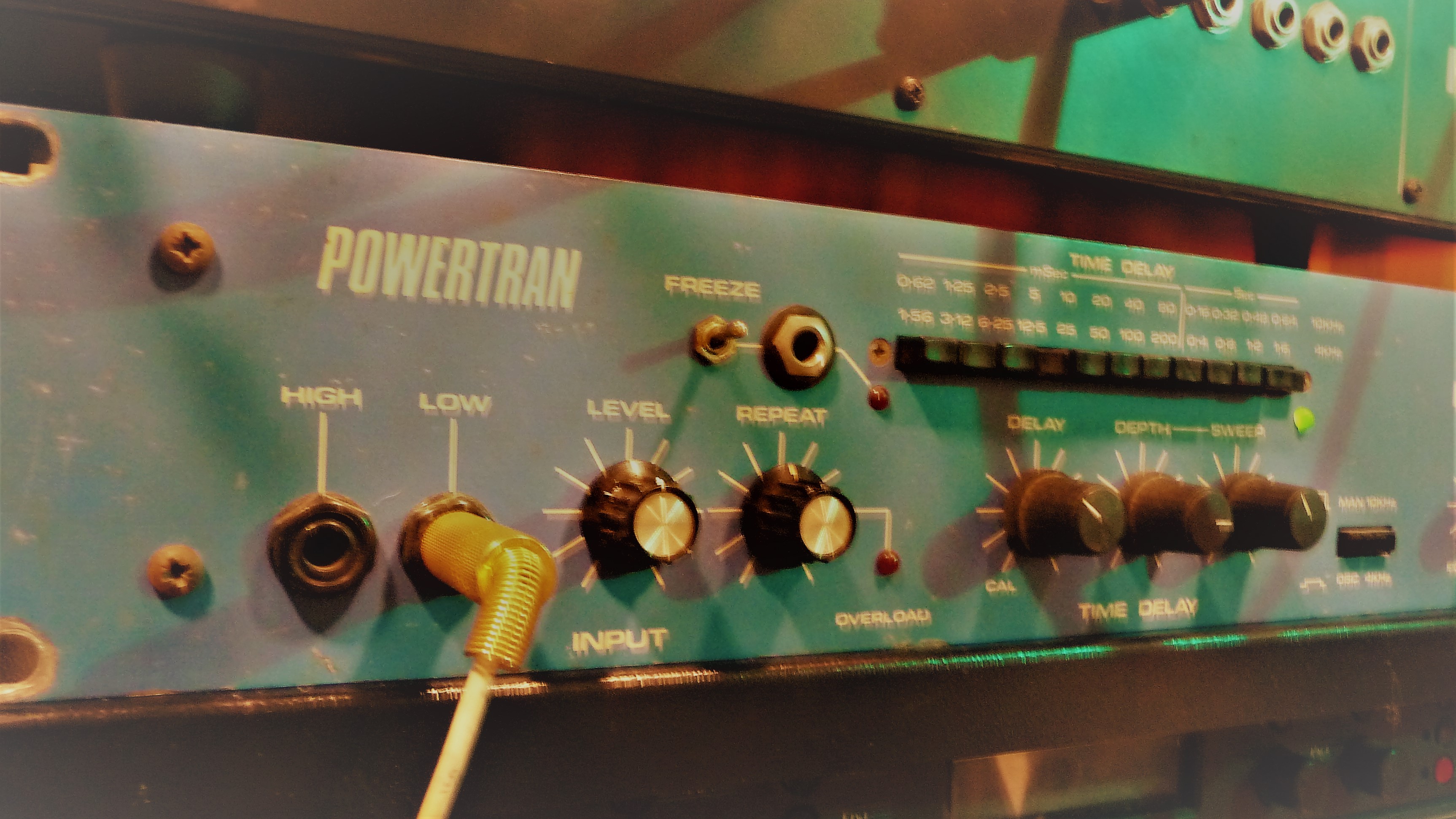
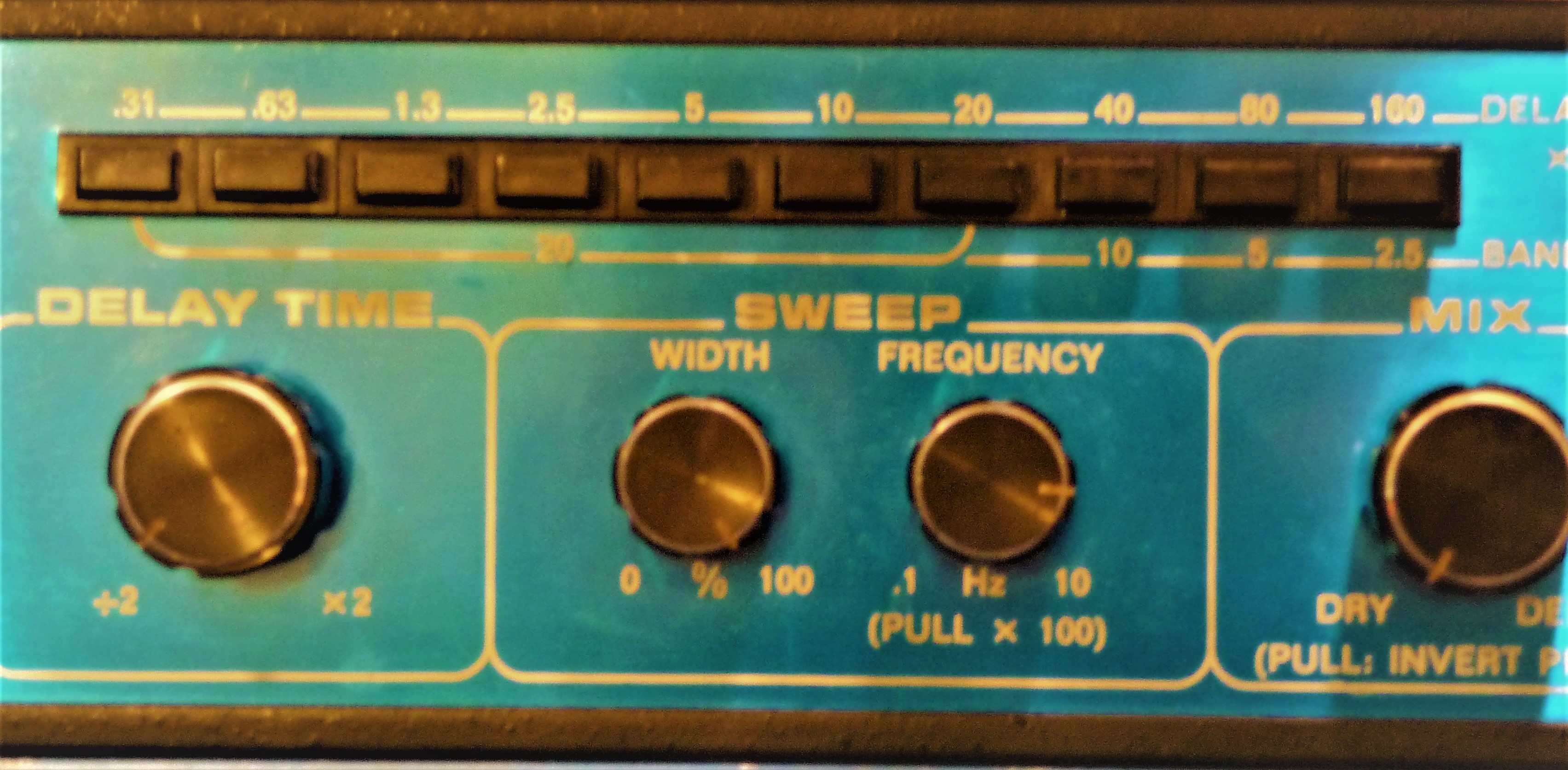
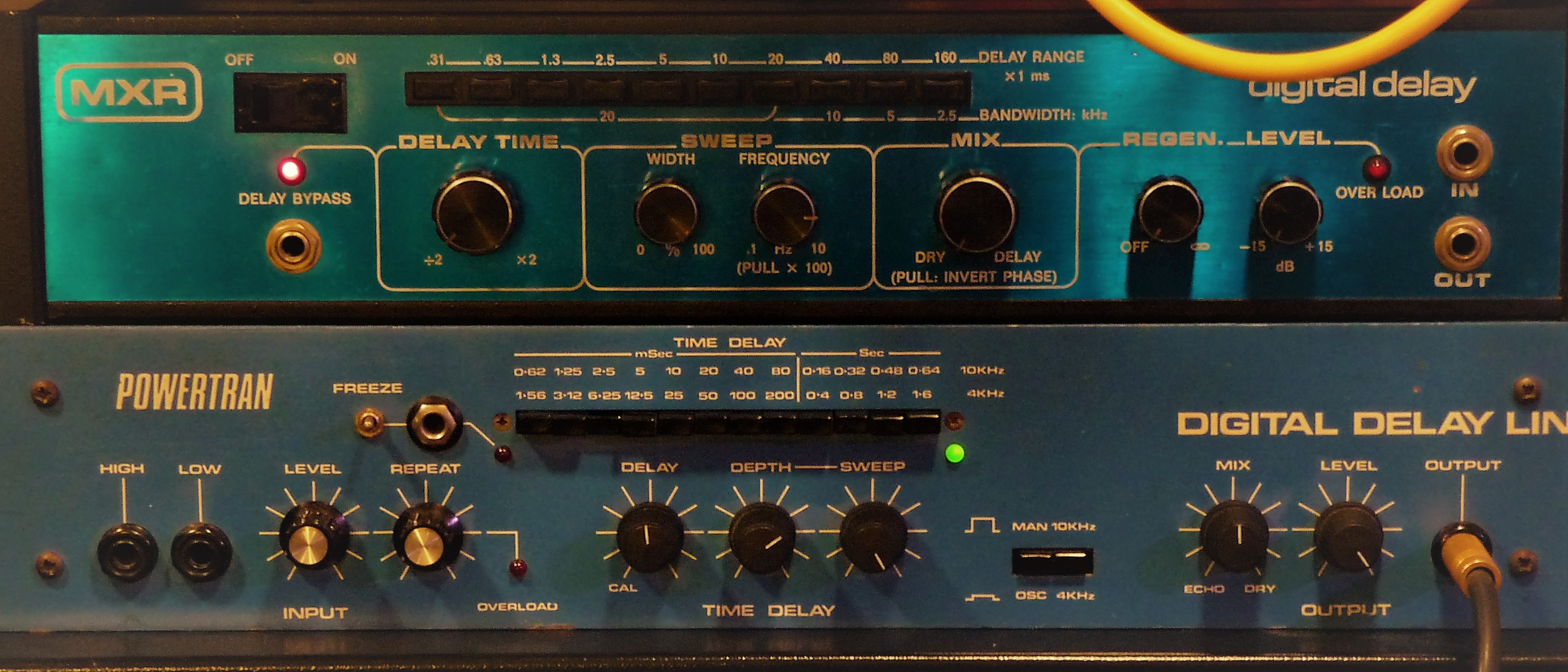
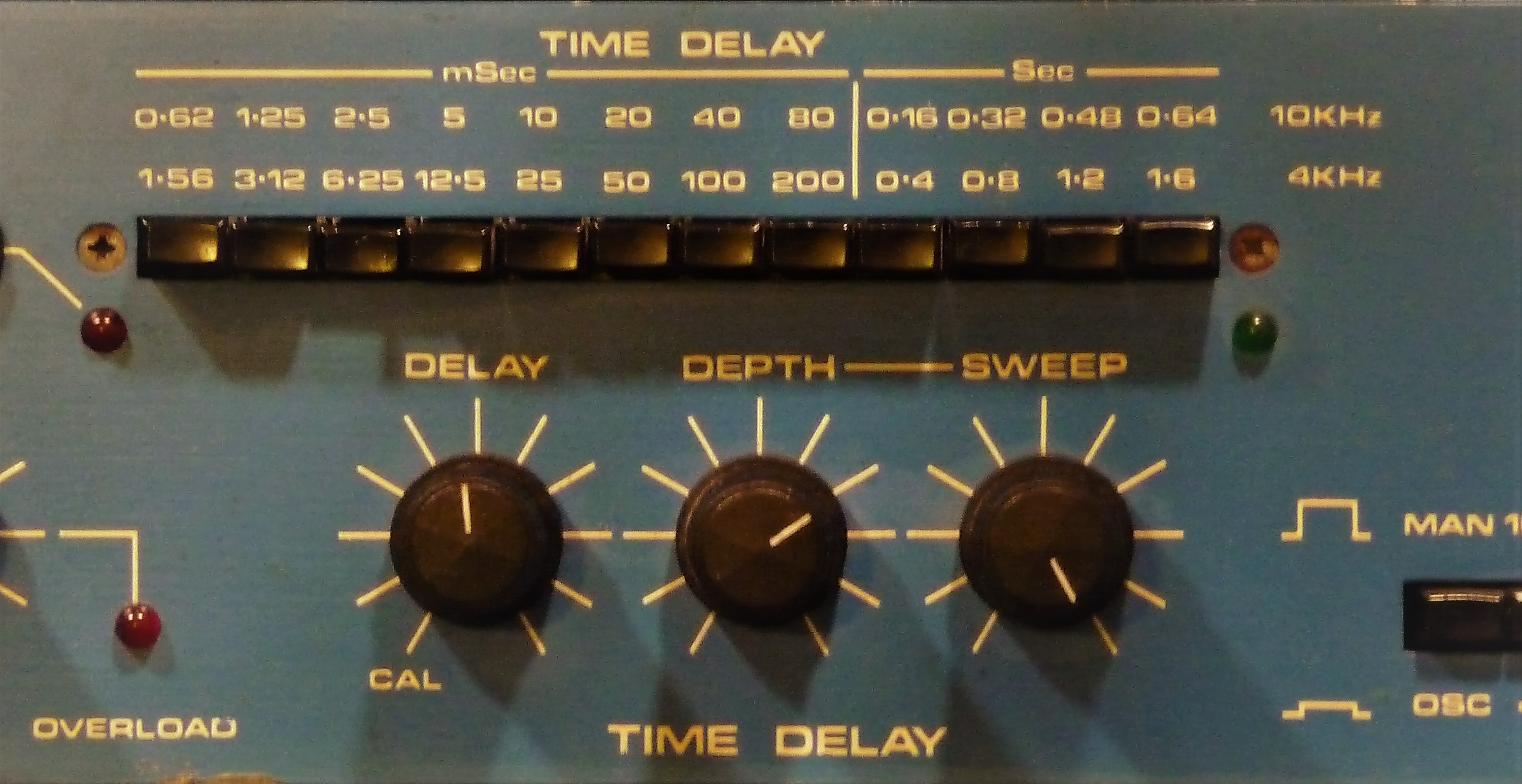
The Powertran Digital Delay Line front panel is pretty simple and there’s nothing surprising. Apart from the time selector switches (the same as on the MXR we’ve already seen in a previous post), it’s straightforward.
Powertran DDL Time Delay buttons
The Time Delay buttons always select multiples of the original tempo. If the delay is in sync with the track tempo, pushing different switches gives a very fashionable beat repeater effect today — where, for example, a loop speeds up or slows down but always stays in sync with the song. Some machines, like the Powertran, had a freeze button so the sample could be repeated without decaying — just like a sampler.
Specifications:
“Digital encoding for studio quality results. Time delays from 0.625ms to 1.6 seconds. Produces all popular time delay effects: Phasing, Flanging, ADT and chorus, Echo (including “freeze” for infinite repeats), Time domain vibrato, etc.”
Powertran Digital Delay Line
The Powertran Delay has a delay time of 0.625ms to 0.64s at 10kHz bandwidth, while it has 1.6ms up to 1.6 seconds at 4kHz. These times can be halved using the delay knob. The modulation LFO has a range from 0.025Hz up to 17Hz and a triangular waveform.
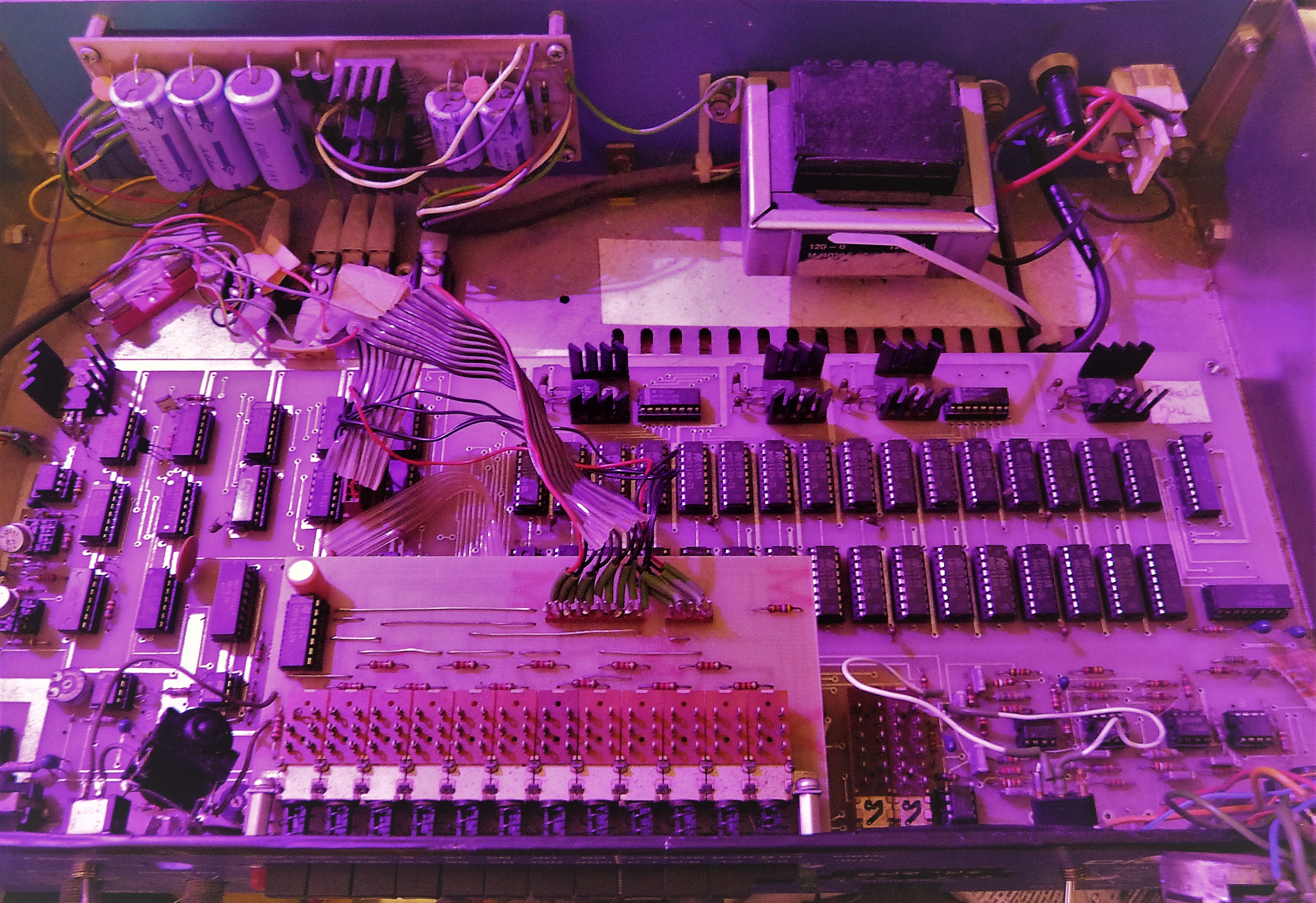
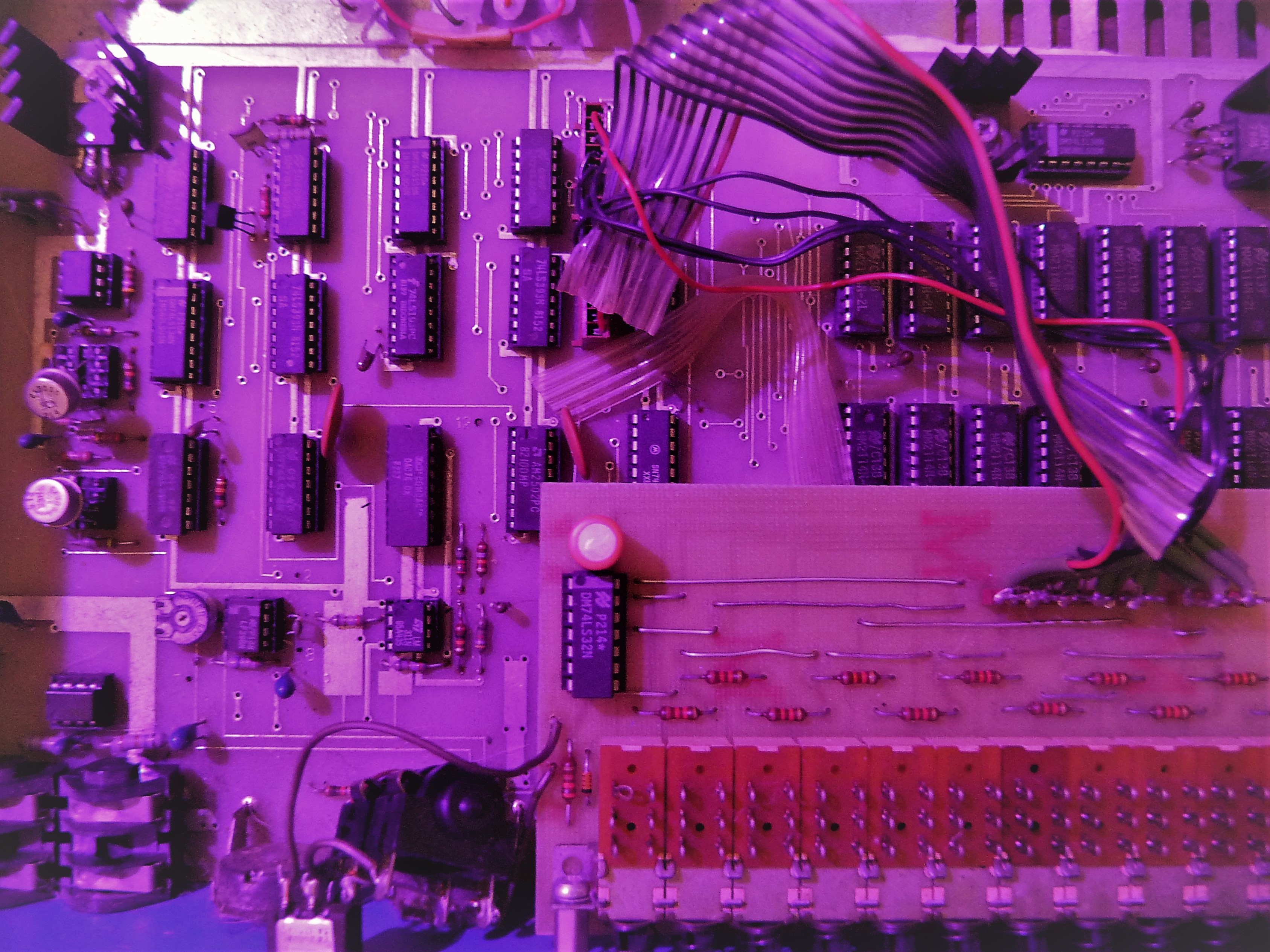
Powertran DDL circuit board
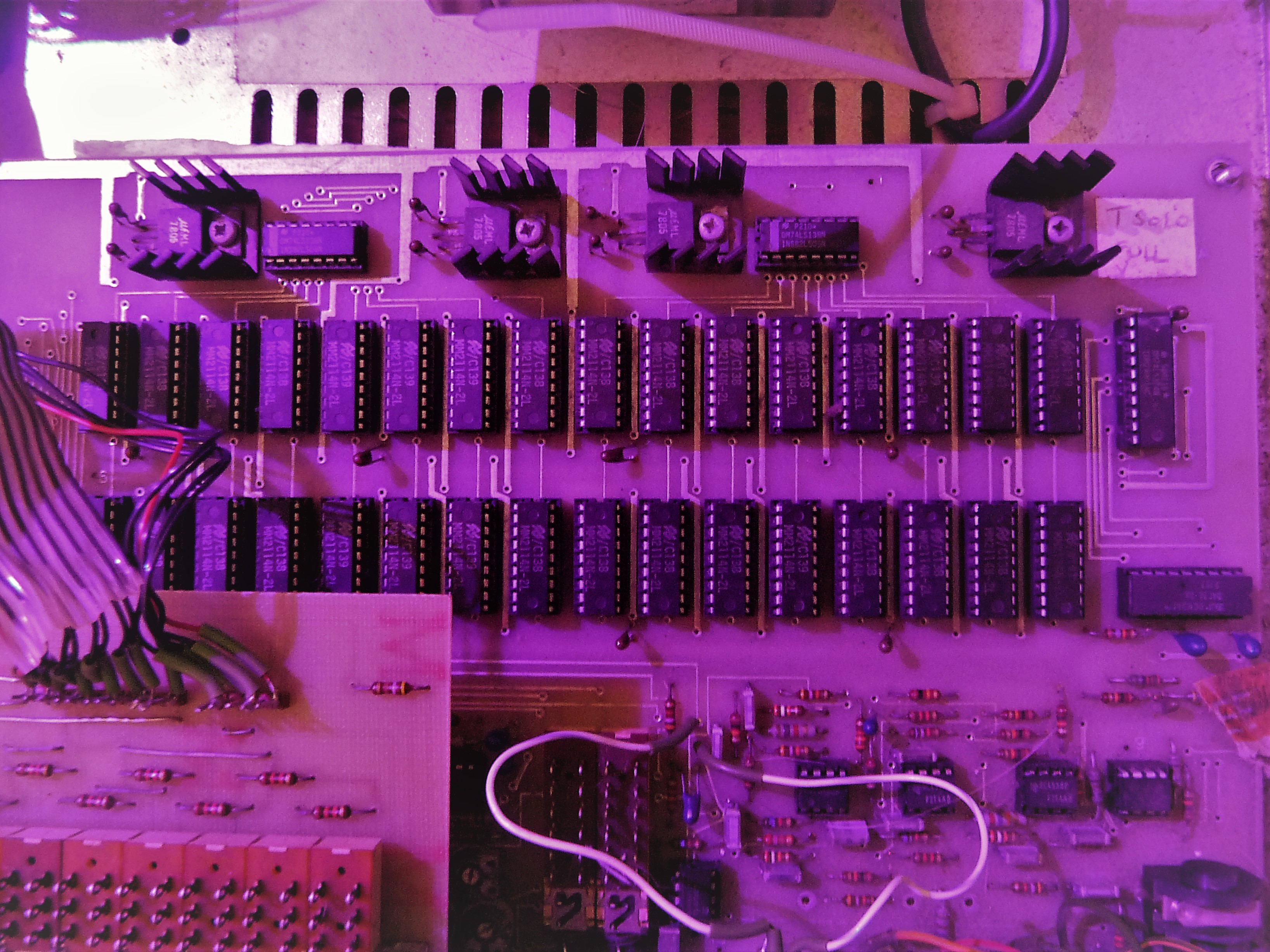
The input signal, once amplified, is passed through two switchable HPFs at 4kHz and 10kHz, working as anti-aliasing filters. The ADC analog-to-digital converter is an 8-bit one. The dynamic range of the Digital Delay is 72dB. The RAM memory is 16K bytes.
Powertran DDL PCB LPowertran DDL PCB R
Here are some examples of the crazy effects obtainable with this processor:[Keep your existing audio descriptions/examples or update embeds if you have new ones]
The MXR M-113 Digital Delay has been one of the most popular first generation audio delays, as it had a good quality but was more affordable than the previous processors. Introduced in ’76 at around 1000 USD, it was still expensive, but a lot less than the other digital delays available in the market.
MXR was specialized in guitar pedals, this delay was instead offered in a 19″ rack unit and, same as the other effects of the professional rack series, (Flanger/Doubler, Graphic EQ, Pitch Transposer) became very popular and used by famous artists such as David Gilmour, Frank Zappa, Roger Waters, Brian May and Mike Rutherford.
Modular
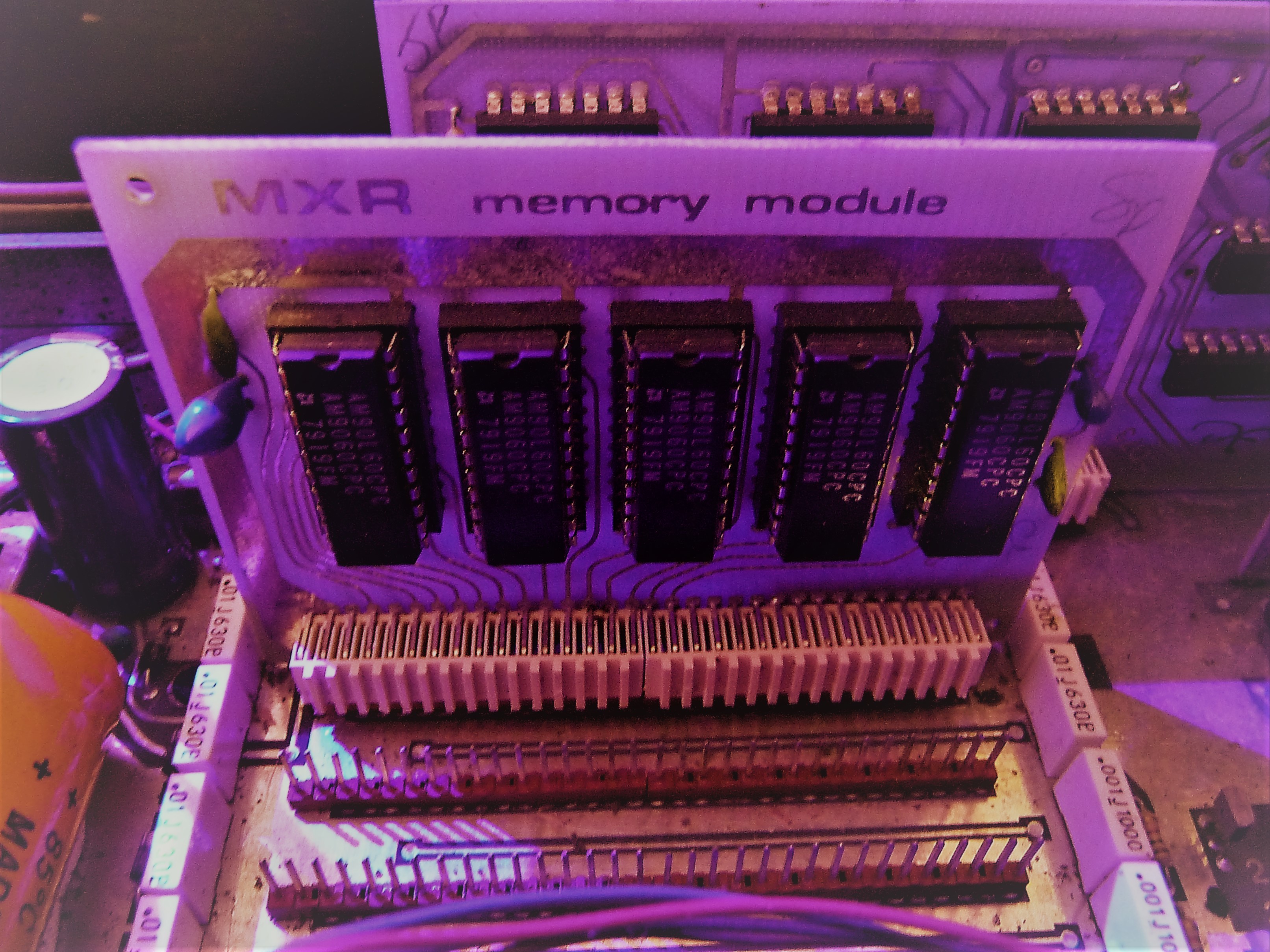
MXR memory module
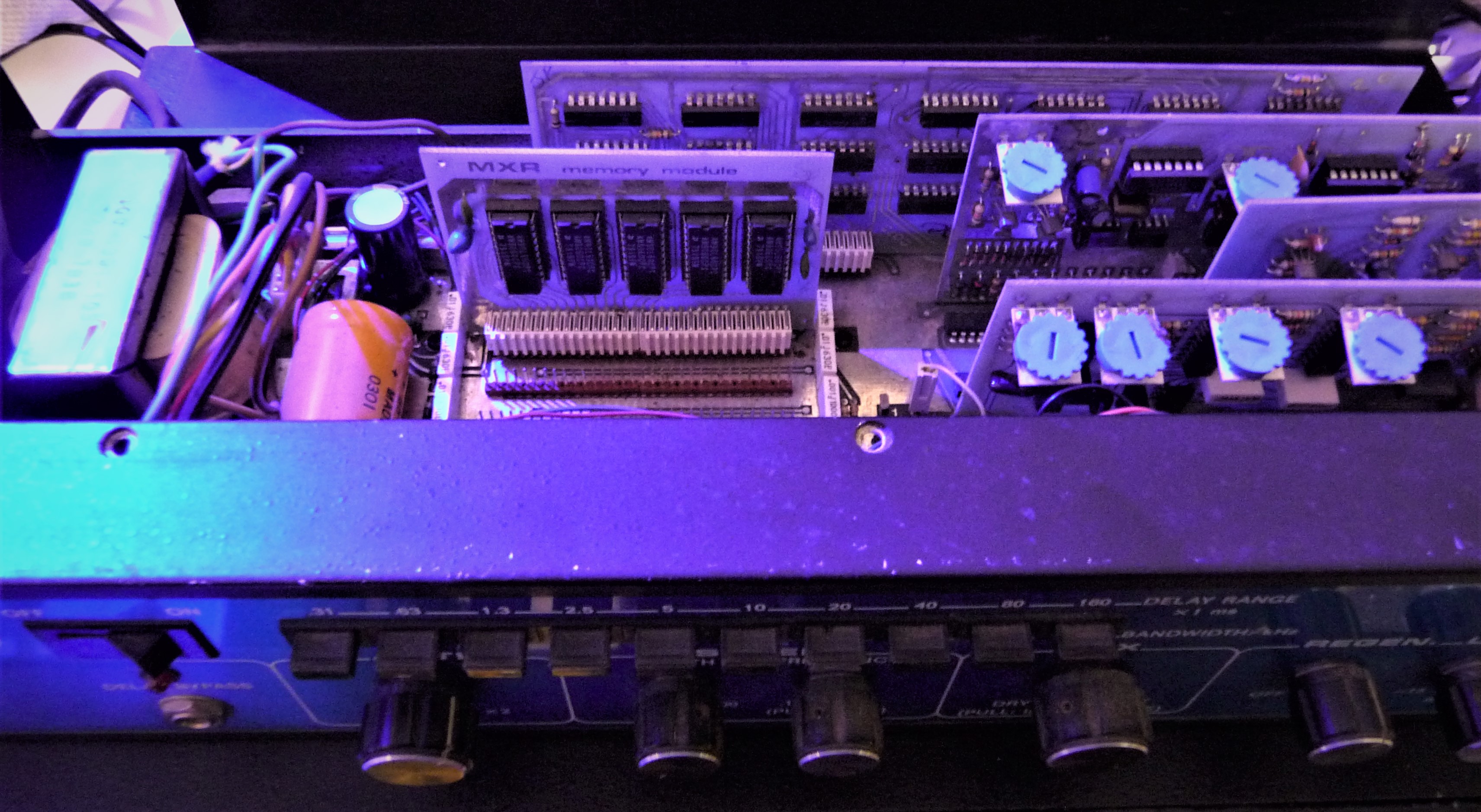
To contain costs, a modular architecture was chosen. Optional memory boards were inserted in slots, to increase the delay time, but these were pretty expensive, costing almost like a complete unit.
MXR Digital Delay Internal Cards
Digital noise..well not only that! :D
Unfortunately the M-113 Digital Delay, same as its collegues of the same period, is pretty noisy and not only referring to the actual standards. Apart digital noises always present, these processors have a marcated tendency to generate audio hum.
The Model 113, Digital Delay has a maximum bandwidth of 20KHz, but this decreases with longer delays, down to 2.5KHz. The longer the time between repetitions, the tighter the passing frequency band, being reduced through antialiasing filters (HPF and LPF) the more the delay time is increased.
MXR Digital Delay Test Drive
As there are several video examples already of this delay tested on guitar, I thought it could have been a good idea to try it, using some unusual but hopefully interesting sounds.
To record, I used a dbxDI box and the signal sent to a Universal Audio610 tube preamp, even taking all possible counter-measures, still a bit of hum is audible.
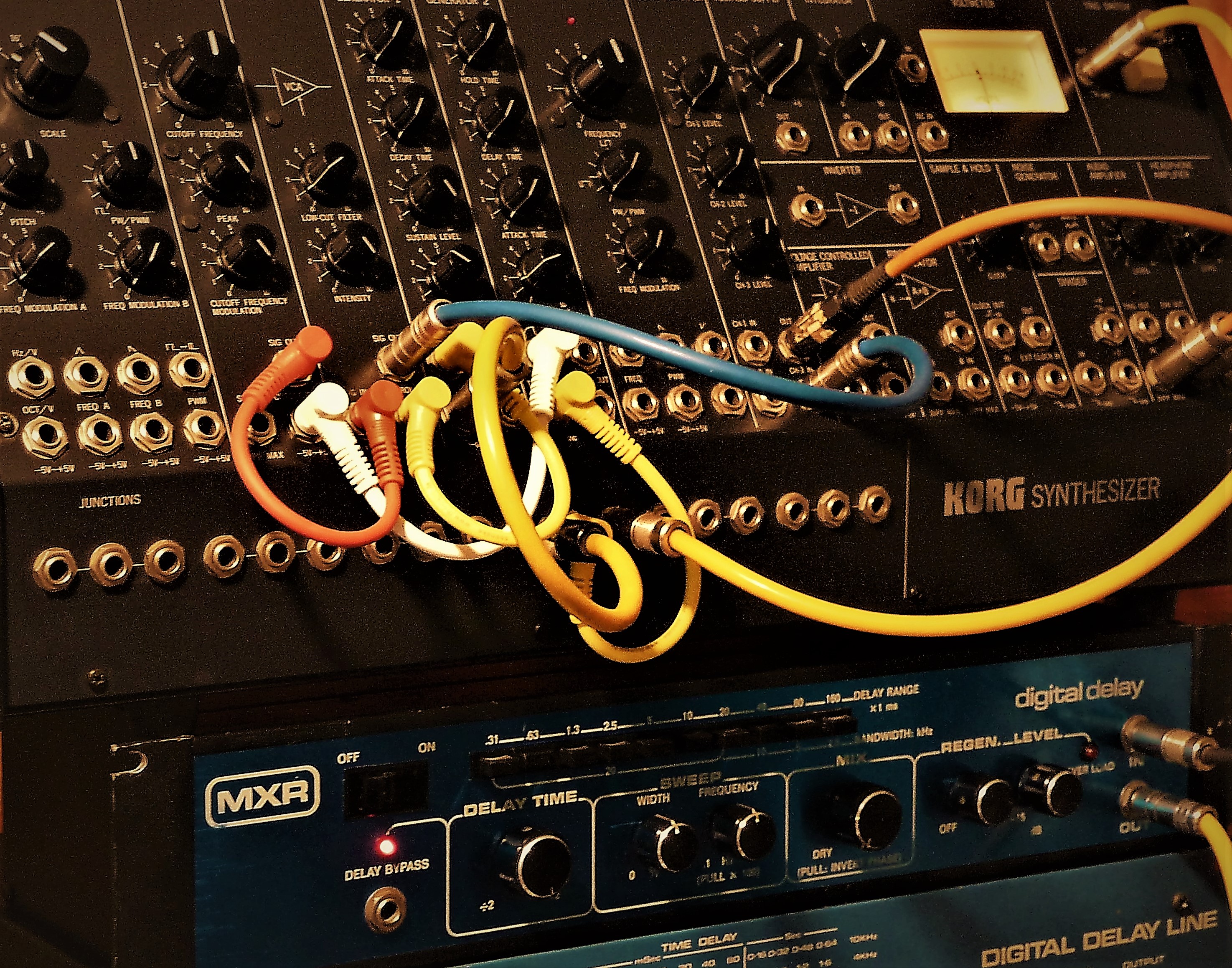
On the examples below, I feeded as sound source, a sweep from the filters in feedback of an old Korg MS-50 synthesizer, some piano chords I had recorded from a real piano and a couple of seconds of an oldschool reggae classic.
MXR Digital Delay, Test-01, (MS-50 Filter Sweep)
01) Dry sound, straight from the MS-50.
02) Delay Range 160ms, Delay Time x2, 50% mix and maximum regen (feedback)
03) Delay Range 160ms, Delay Time 0, 50% mix and maximum regen (feedback)
04) Delay Range 160ms, Delay Time 1/2, 50% mix and maximum regen (feedback)
05) Delay Range 160ms, Delay Time Sweep 01 (moving the Delay Time knob)
06) Delay Range 160ms, Delay Time Sweep 02 (moving the Delay Time knob)
MXR Digital Delay, Test-02 (Piano)
I chose these piano chords I recorded as, having long decays, are ideal to test the effect of short repetitions, when modulated. The effects space from phasing to complete madness. The last one is a strong modulation at the higher band of frequency of the sweep, reminding the effect of a ring modulation.
1) Dry Piano
2) Delay Range 1.3ms, 50% mix 3) Delay Range 10ms, 50% mix
4) Delay Range160ms, 50% + Mod
5) Max Frequency Mod
MXR Digital Delay, Test-03 (Rhythmic Loop)
On the following examples, let’s try something that really impressed me first time I played with a Powertran (An article on it, is coming soon). On the MXR the feedback has a faster decay and there’s not the “freeze” function, but the effect it is interesting, too. Once the delay is at tempo with a rhythmic pattern, having adjusted the decay time knob, all Delay Range buttons create a different version of the pattern, but on different speeds. Being the buttons based on a double time sequence, all these are compatible in tempo. Let’s experiment with a small classic reggae riddim loop:
1) Dry loop
2) Loop effected as sort of Beat Repeater
MXR Digital Delay, Test-04 (MS-50 patch)
Last example, this time using a more complex sound from the MS-50.
1) Dry MS-50 sound
2) MXR MS – 50%MIX, 75% Feedback
3) MXR MS – 50%MIX, 75% Feedback + Mod
4) MXR MS – 50%MIX, 75% Feedback + Fast Mod
**Updated February 27, 2026**
Refreshed the English for better flow and readability. Core ideas unchanged — still celebrating the "procrastinated" sound of vintage echoes and delays. Planning audio updates and continuations (RE-201 Perry dub, SDE-3000 Mad Professor style) soon. OSO certified as always! 🎶
Echo, unlucky nymph
Since ancient times, places destined for public speech or shows were chosen based on their acoustical characteristics. A powerful voice heard near a sharp rock wall could impress the audience and add a magical ingredient, as if the forces of nature were happy to help the venue by amplifying the desired message.
Nymph Echo on a Roman painting
The Echo was so important that it had a dedicated character in Greek/Roman mythology:
Echo, a mountain nymph, helped Jupiter distract his wife Hera with endless discussions while the god was cheating on her with other nymphs. Realizing the trick, Hera cursed Echo, removing her ability to speak. The only sounds she could make were the endings of the words she heard. As usual in ancient myths, the story ends in tragedy, with Echo dead but her beautiful repetitive voice forced to live on forever — only in the most remote and inaccessible places.
Natural echoes or reverbs from special rock formations or the reflective shapes of caverns were used to create dramatic effects on human speech, chants (and minds) for ritualistic or entertainment purposes.
The Art of Procrastination
Builders could, over time, recreate nature’s vast spaces through architecture. The possibility of impressing the public with special effects slowly moved from remote areas to cities. Acoustically shaped amphitheaters, and later closed spaces like theatres and religious buildings, were constructed for this purpose. Music began to be played in dedicated “chambers” or “halls”, with reflective walls and high ceilings, to achieve long reverberation times and decays.
At the beginning, recording studios captured the space where musicians played, with microphones pointed toward ceilings or walls to pick up the returning delayed sound, which was then mixed with the original.
Later, rooms were dedicated exclusively to reverberation. A sound from the control room was sent to an amplifier in an empty room or chamber, completely bare and lined with reflective materials. One or more microphones captured the effect, which was mixed back into the rest of the sounds on the mixer. To add color or create special effects, thin metal plates or springs were also made to resonate in the room and recorded.
Plates
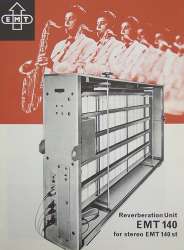
By the end of the 1950s, technology had advanced to the point where the reverberation process could be standardized. Every major studio had a plate reverb like the EMT 140, or a simpler DIY version. The effect was achieved using a large reflecting surface — in this case, a metal foil held in tension by springs. A speaker inside the unit vibrated the plate, and a pickup captured the signal, which was then amplified through a tube preamp. A mechanical damper reduced the decay, and later versions used two pickups in different positions to create a stereo signal.
The effect is warm and beautiful, but unfortunately the technology required large spaces — the plates were often more than 1 meter long — and these reverbs were very heavy and expensive.
The effect was obtained through the use of a big reflecting surface, in this case a metal foil put in tension through springs. A speaker inside the unit, puts the plate in resonation and a pickup captures the signal then amplified, through a tube preamp. There was a mechanical damper, to reduce the decay and later two pickups, placed in different places of the box, to obtain a stereo signal.
Spring Reverb
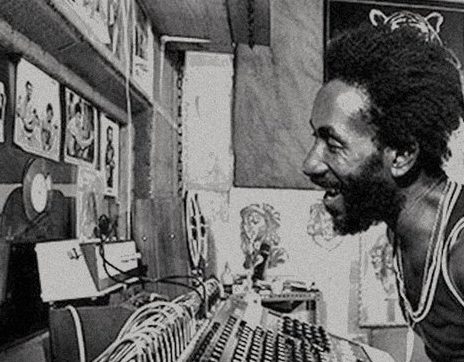
Lee “Scratch” Perry and his Grampian spring reverb (Black Ark Studios)
A lower-quality delayed signal could be obtained using the same process but with springs in tension instead of plates. The idea, commercially developed by organ pioneer Laurens Hammond, was much less bulky than plates and even portable — to the point that it became standard on electric guitar amplifiers. Spring reverbs give a particular vintage flavour to guitars, drums, and percussive instruments — really great for old funk or reggae.
Tape Echoes
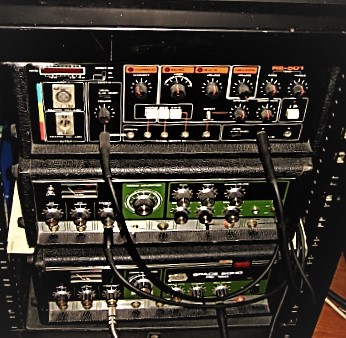
With advancing technology, magnetic surfaces in the form of tapes (Echoplex) or disks/drums (Binson/Meazzi) were used to record and reproduce delayed signals on dedicated processors.Roland RE501, RE-201, RE-150 Tape Echoes (maxproaudio)The tape loop was the first form of reproducing sound with delay. Two tape recorders were used before dedicated machines existed: one to record and the other for playback. The longer the distance between the record and repro heads, the longer the delay time.
Roland RE501, RE-201, RE-150 Tape Echoes (maxproaudio)
The tape loop has been the first form of reproducing a sound with a delay. Two tape recorders where used before dedicated machine were born, one to record and the other for the playback. Delay time increased, the furthest the second recorder was placed from the repro machine.
One of the most popular tape echo units has been the Roland RE-201 Space Echo, still highly sought after by dub producers today at pretty high prices. Its tape was left unrolled in a transparent compartment inside the unit. Raising the top and watching the tape move in an apparently chaotic way, listening to the smooth mechanical noise while smelling the characteristic chemical odour, remains a very unique experience.
Some special effects obtained with tape echoes were quite popular in the 60s and 70s, especially for sci-fi and dub. I recorded a few examples with my RE-201, with the “Intensity” (feedback) at maximum — conditions under which the Space Echo starts auto-oscillating, feeding its own noise.
The effects obtained are warm and immediately bring you back to the past. The first track, called RE-201 Slam, is obtained by slapping the unit forcefully; the shock is captured by the internal spring reverb. The third track starts dry and adds effects from the second part. Tracks 2 and 4 are sweeps, moving the “Repeat Rate” knob.
Many virtual tape delay plugins today are based on the RE-201 Space Echo, the most popular in the RE series.
According to Wikipedia, a bucket-brigade device (BBD) is a discrete-time analogue delay line, and an analogue delay line is a network of electrical components connected in cascade, where each element creates a time difference.
A series of capacitors created the delay. Summing a large number of them could produce the desired long echo.
Analog delays cannot reproduce the same sound for long — each repetition gets dirtier — and this, from the perspective of that era, was seen as something to improve. They are still very popular and produced for guitarists.
Digital Delay Lines
Digital delays can repeat the same sound while maintaining the quality of the original, just like a sampler, only when the sample rate and bit resolution are high enough.The first commercial machines had very low resolution, so the samples were noisy and had limited bandwidth. This is the characteristic that, in my opinion, makes them attractive and useful even today, when clean sound is no longer the priority.
At the beginning, these machines were only within reach of professional studios or wealthy producers. Then Electronics & Music Maker Magazine published a series of articles with schematics and instructions for a DIY delay, making this new technology affordable and accessible to a wider public.
Being a lover of dub and vintage equipment, I’ve been lucky to own a few of the classic delay devices, bought when prices were extremely low because nobody at that time needed a bulky, noisy delay-only machine.
Vintage delay lines have an other interesting aspect.
Powertran Time Delay switches
Their buttons always select multiples of the original tempo. If the delay is in sync with the track tempo, pushing different switches gives a very fashionable beat repeater effect today, where, for example, a loop speeds up or slows down but always stays in sync with the song. Some machines, like the Powertran, had a freeze button, so the sample repeated without decaying — just like a sampler.
Effects obtained apart the Echo
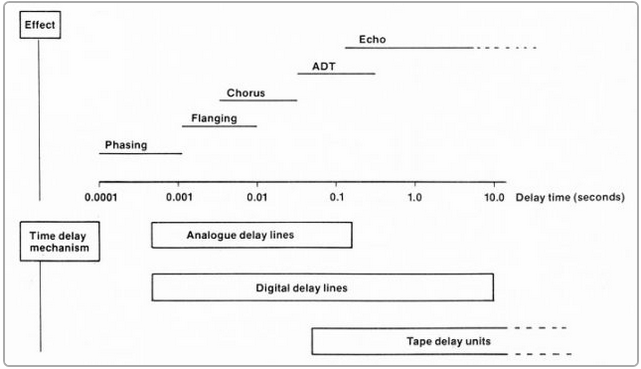
A delay line can create a series of effects not strictly limited to repetitions of samples. By modulating the processed signal and blending it with the original, a range of interesting effects can be obtained.
Phasing
When the same signal is combined with its delayed copy, it’s like passing it through a filter. The resulting comb filter, if modulated by changing the delay time via a low-frequency oscillator (LFO), becomes the pleasant effect called phasing.
Flanging
Same as phasing, but with a longer delay (around 10ms). Similar to chorus but more dramatic, with a marked sci-fi character.
Chorus
Even more delay and slow modulation, possibly with dry and wet signals on opposite sides of the stereo field, gives the classic chorus effect that doesn’t need much more explanation.
ADT
Automatic Double Tracking,
Automatic Double Tracking was very popular in the 80s. The time delay is kept just below the perception of individual repetitions and is used especially on vocals to create the illusion of doubling without recording two different voices.
On the next posts, we will test drive three of the old-school digital delays still in my hands: MXR Digital Delay, Powertran Digital Delay Line, and the Roland SDE-3000
maxpro comes from maxprofessor, a nickname that was given to me while I was a fan of the Dub master Madprofessor, trying Dub techniques in the studio and giving classes of music technology, in a music school.
As I grew up under my mother’s piano, I’ve been lucky to learn playing pretty early in age. My first teacher, is still an excellent classic piano performer.
I was still a boy, when my father arrived home with a stereo radio and a good pair of headphones, this fact can have helped me in developing my musical tastes, for sure. As we are talking about the beginning of the 70s, the only local radio station transmitting stereo, was an American one, with lots of fresh Funk, Soul and Jazz on air all the time, music I’ve been loving (and played) for the rest of my life.
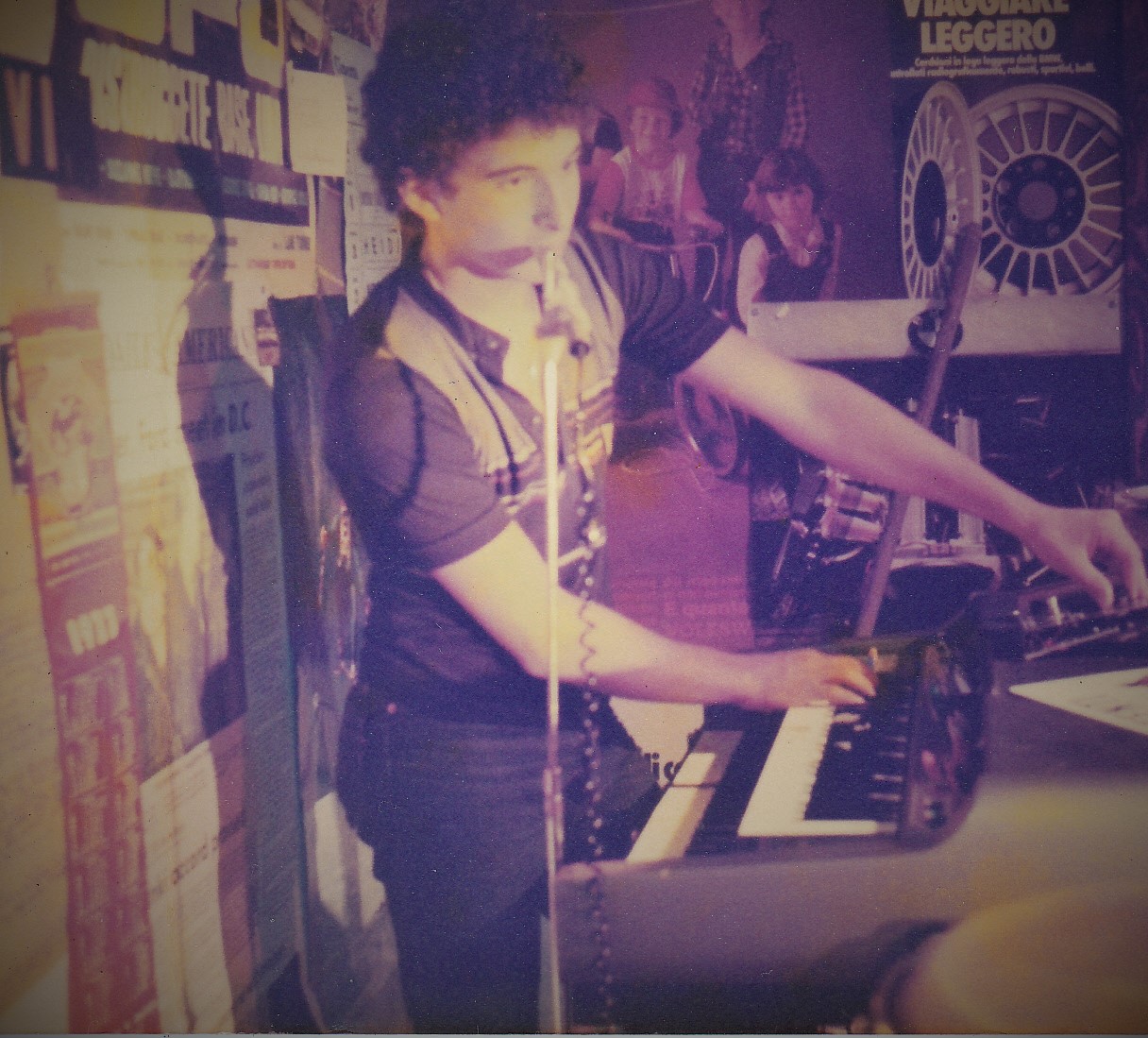
Playing a Farfisa VIP500 (end of the 70s)
At the age of 14, discovering progressive rock and in particular Emerson Lake and Palmer and the Yes, I started playing rock organ and later keyboards with local bands, turning slowly from Rock to Jazz Fusion and Acid Jazz.
In the years, I had the opportunity to study Jazz with three excellent teachers: Still in Italy, Jazz piano with Danilo Memoli, while in Spain, Jazz guitar with Marcelo Saenz and harmony with Leonardo La Peruta.
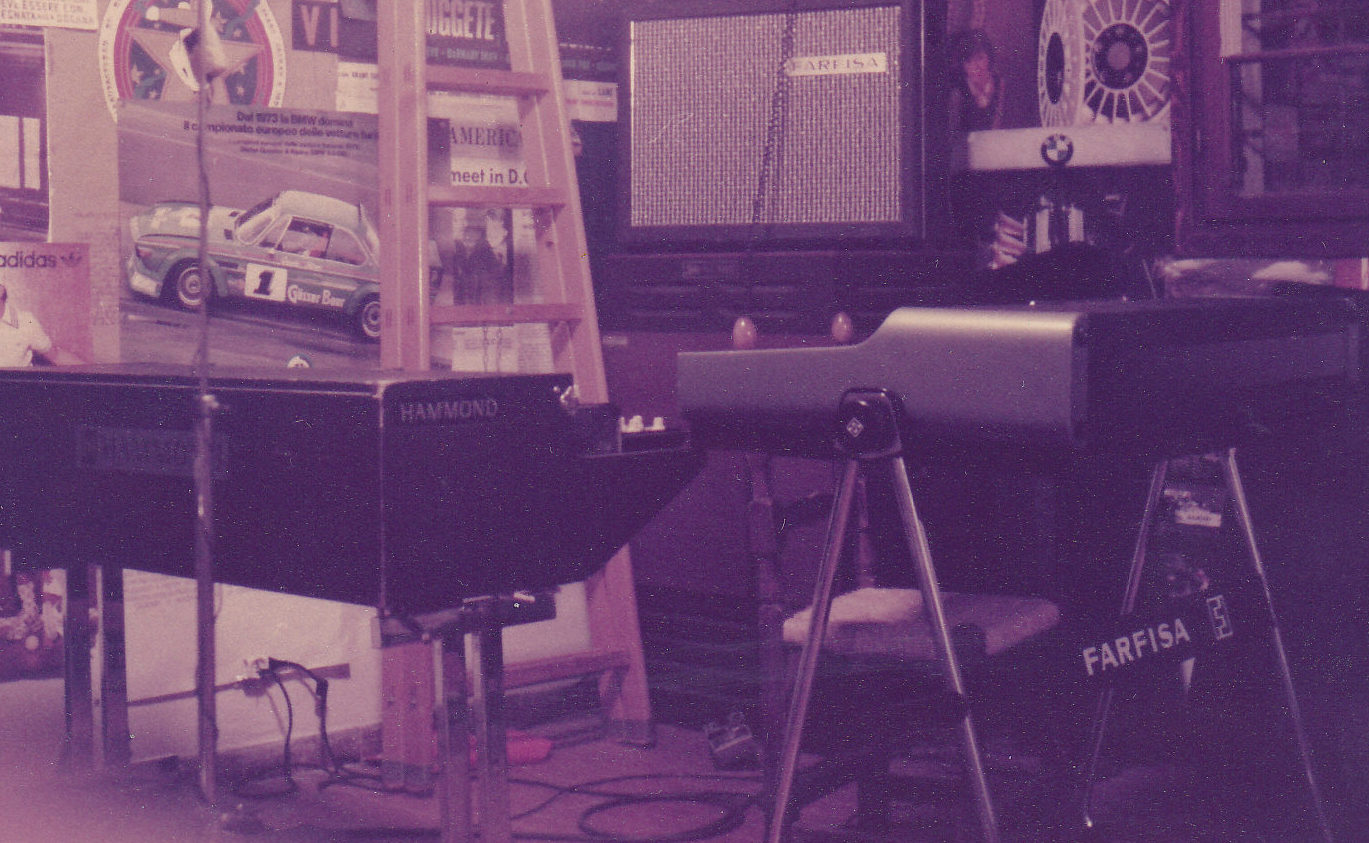
Hammond L100-PS, Farfisa VIP500 + TR70 and Leslie 145-P
Regarding the technical side, I started composing and arranging as soon as MIDI was introduced. My preferred machine for sequencing on those times, was a Yamaha QX-3, but was the arrival of a small Macintosh SE and MOTU Performer, that consolidated a long marriage with digital music creation and production.
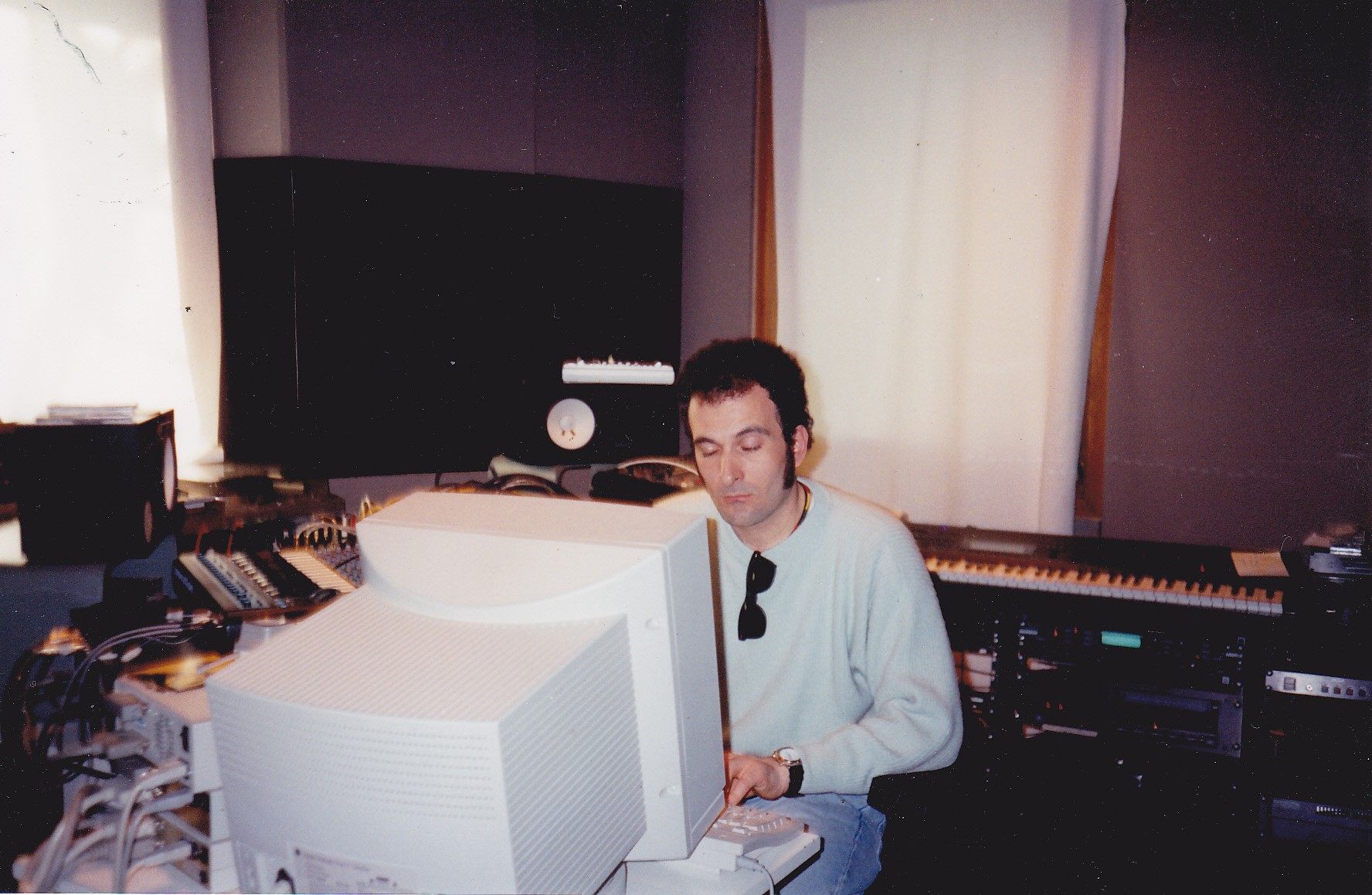
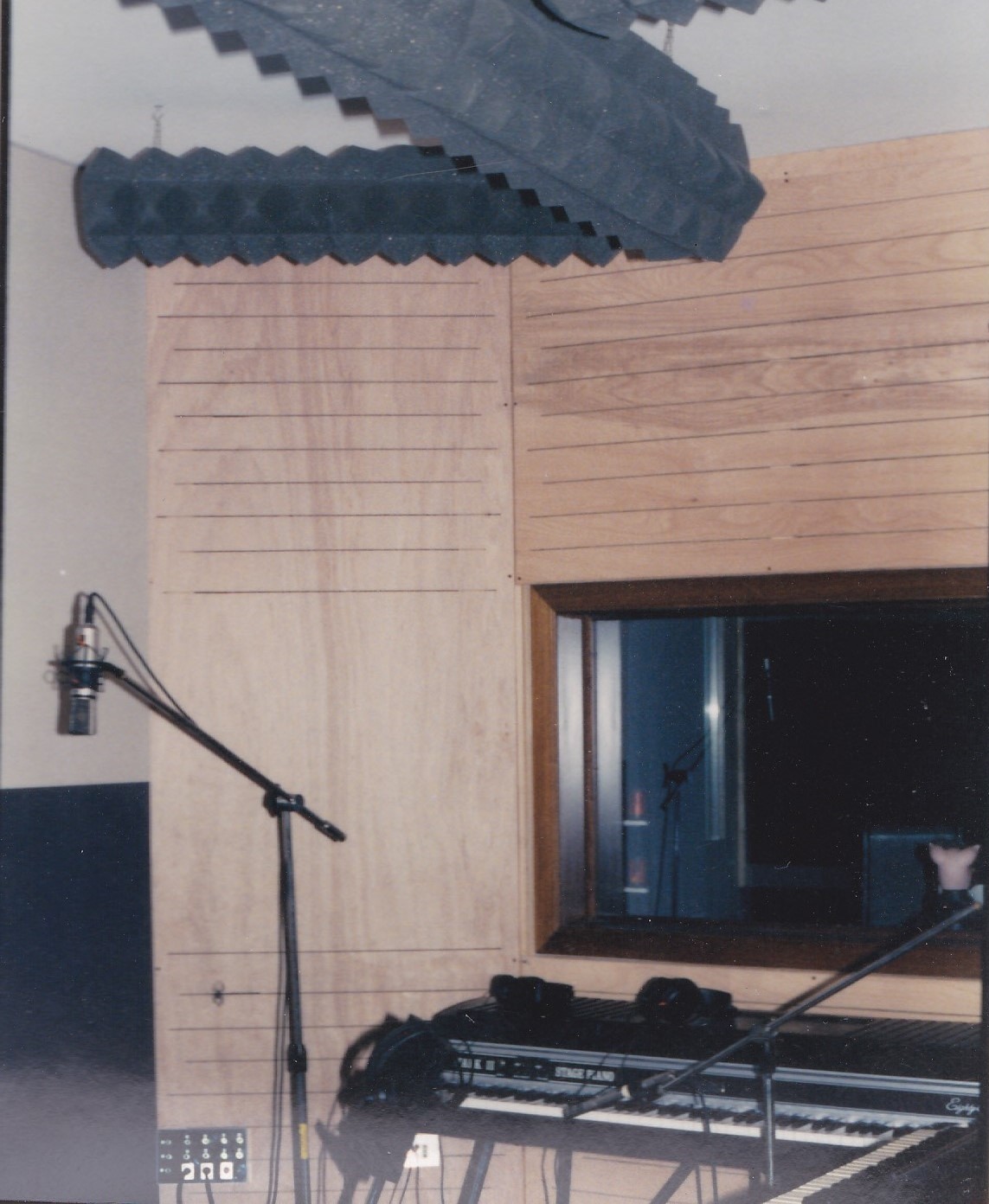
Max in Il Cantiere control room, mid 90sRhodes and Hammond at Il Cantiere studio in the 90s
In the 90s I built a production/recording studio in the north of Italy, based on Digidesign Pro Tools III on a Macintosh 9600 and ADAT.
I soon became specialized in Dance music and Reggae.
Il Cantiere studio control room, in the mid 90s
I’ve been lucky on those times, to be working with the best Dance DJs, producers and singers in my area, releasing a few records with majors such as EMI and WEA.
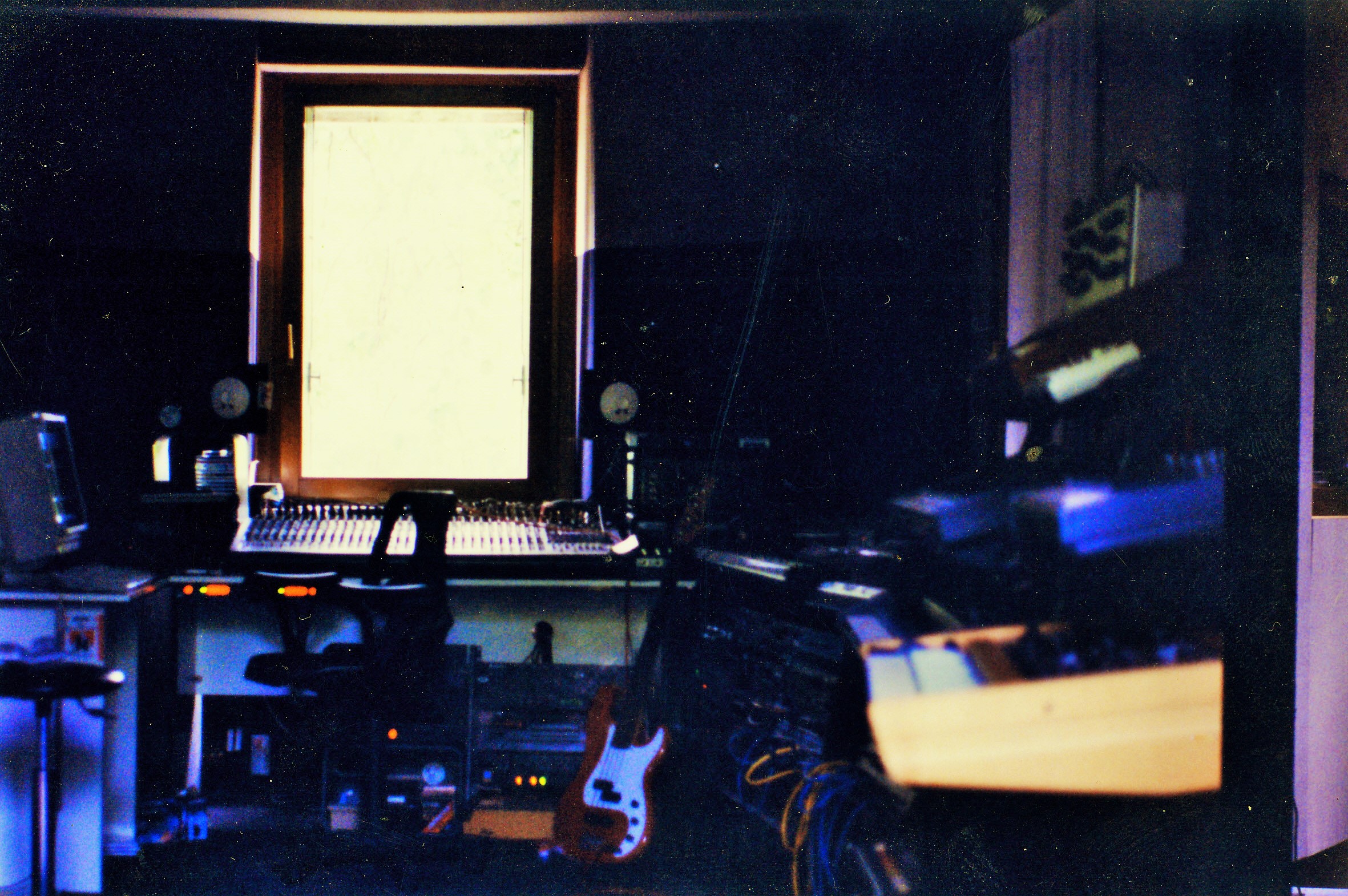
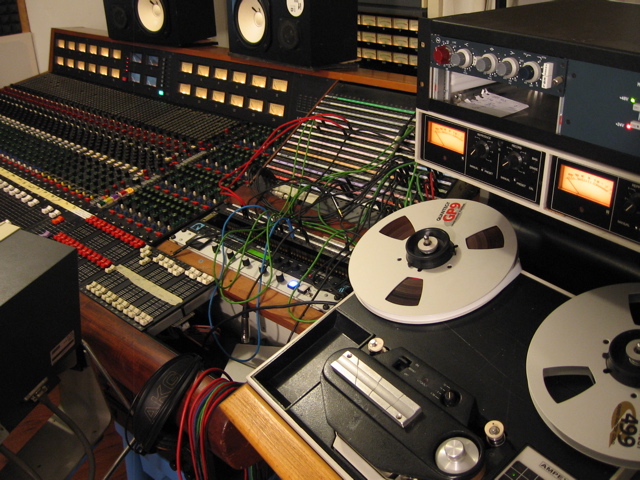
My studio, before 2006 upgradesSoundgroom control room: Trident 80b, Otari MTR-90II 2″ 24 tracks and Ampex ATR-102 1/2″ tape recorders
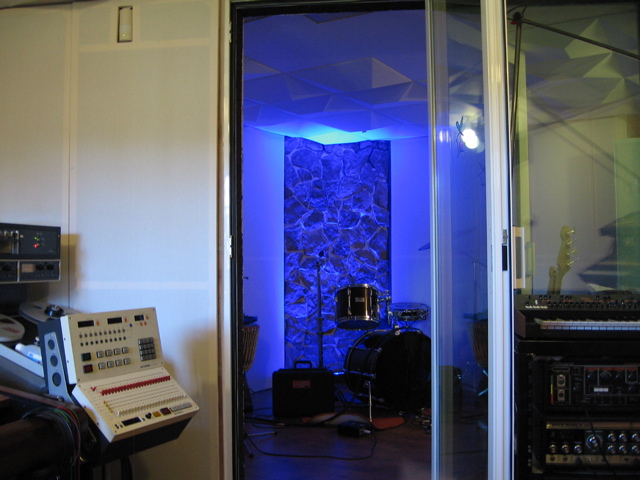
At the end of the 90s, I moved to the south of Spain where I opened a production/recording studio, updated including analog tape, in 2007.
It was based on a 1980 Trident 80b mixing console, a 2″ tape 24 tracks Otari ATR90II and an 1/2″ Ampex ATR102 for the master. On the digital side, it had a Pro Tools HD rig, with Apogee X Series converters.
I’ve been lucky to have an excellent technician helping me, there. Brian had worked as engineer at Trident Audio in London and was very kind in sharing lots of his precious knowledge, to me.
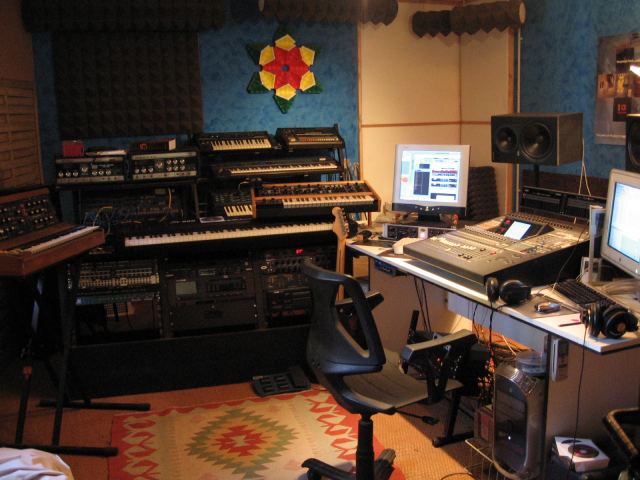
I’m now producing mainly on Propellerhead Reason, but using external gear, as well.
I have a post that explains a bit how I do work, here:
The Theremin can easily be consider the grandfather of the analog monophonic synthesizer. Looking very much as a vintage laboratory tool, its two antennas tend to make it look more as an experimental valve radio than a musical instrument, with some obvious Cyberpunk flavor!
Invented by Lev Termen almost 100 years ago, its name Theremin is the Americanized version of the inventor’s name. The ghosty like and very natural sounding voice it has, could have become much more popular if it wasn’t for the Theremin’s ridiculously difficult interface, that make playing it in tune a really hard task without a proper preparation. The two antennas capture the movement of any object around. Arms and hands are used for the two possible variables that can be changed: Pitch and volume. What sounds pretty easy is in reality very tricky, the movements must be very precise, millimetrical. I suppose this is the main reason Theremin has been popular to violinists. Violins are notoriously difficult to play in pitch with precision, to do it you have to dedicate a hard work of learning.
THEREMIN TODAY
Just a few manufacturers build theremins today, the most popular one, being Moog Music still producing one of the classic designs:
Obviously they’re the perfect choice if you’re looking for a reliable service, but possibly limited to professional performers only, due to their expensive price.
To save some money, several DIY kit exist, a couple offered by the same Moog company, a classic is a kit from Paia:
To be honest a Theremin with a USB port only, can look extremely suspicious to the more traditionalists of us.
Especially considering that from a Theremin, we should expect one of the purest analog sounds possible,
having to do with a soft synth sound generator, can look not too interesting.
What we will consider here, is the opportunity to have a valid and easy to setup interface, to be used to drive our trusted analog synths. The scope of this experiment will be to play through the Theremino Theremin interface a 1977 Minimoog. Using one oscillator only and its triangular waveform, we should arrive to a pretty good Theremin sound!
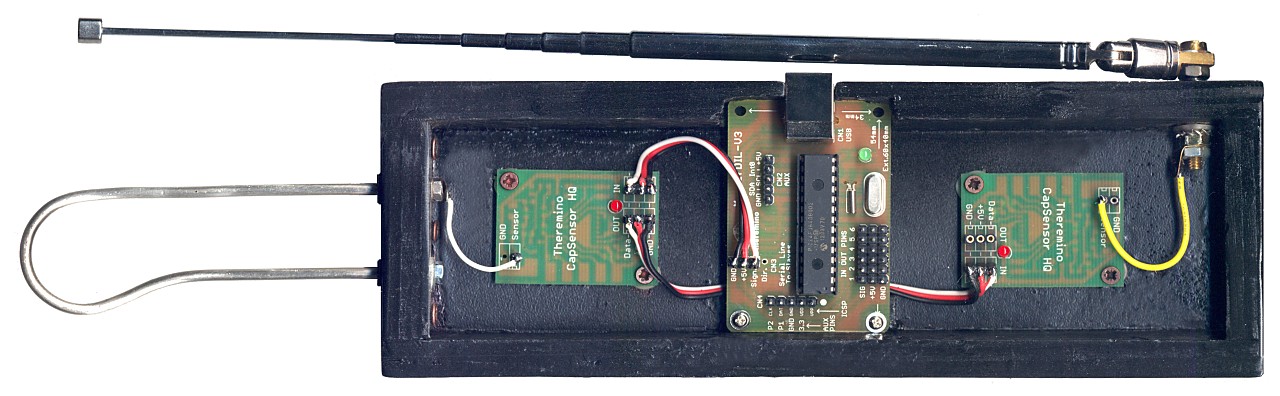
As the cards can be bought already assembled, mounting a Theremino Theremin is an easy and fast operation.
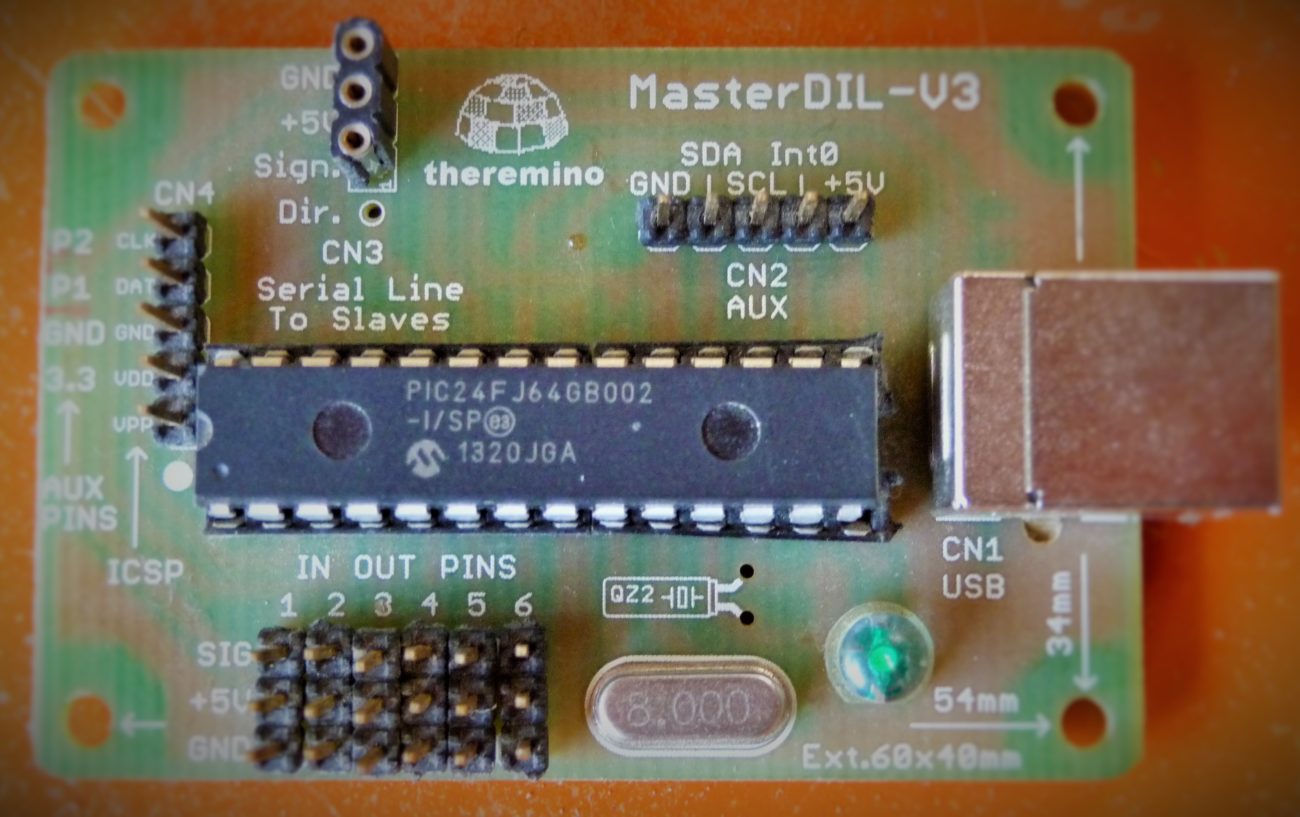
What we need for a complete Theremin is a Master and two CapSensor cards. All is connected through simple multi connectors ribbons and the USB is connected to the PC.
Theremino Master
What happens is that the two antenna capture the movement of the body and generate SLOT values, that are converted from the Theremino Theremin software in notes. Usually the left hand is used for volume and the right for pitch information.
Originally the Theremino Theremin was able only to play its soft synth, but recent developments permit do a lot more. Installing the LoopMIDI shareware application, Theremino Theremin slot data can be converter in MIDI values through the Theremino SlotsToMidi, avoiding the use of the Theremin soft synth, but using the MIDI to play a real synth instead. To be closer in sound to the original, we will use a vintage Minimoog, converting MIDI to Voltage control, through a Kenton Interface.
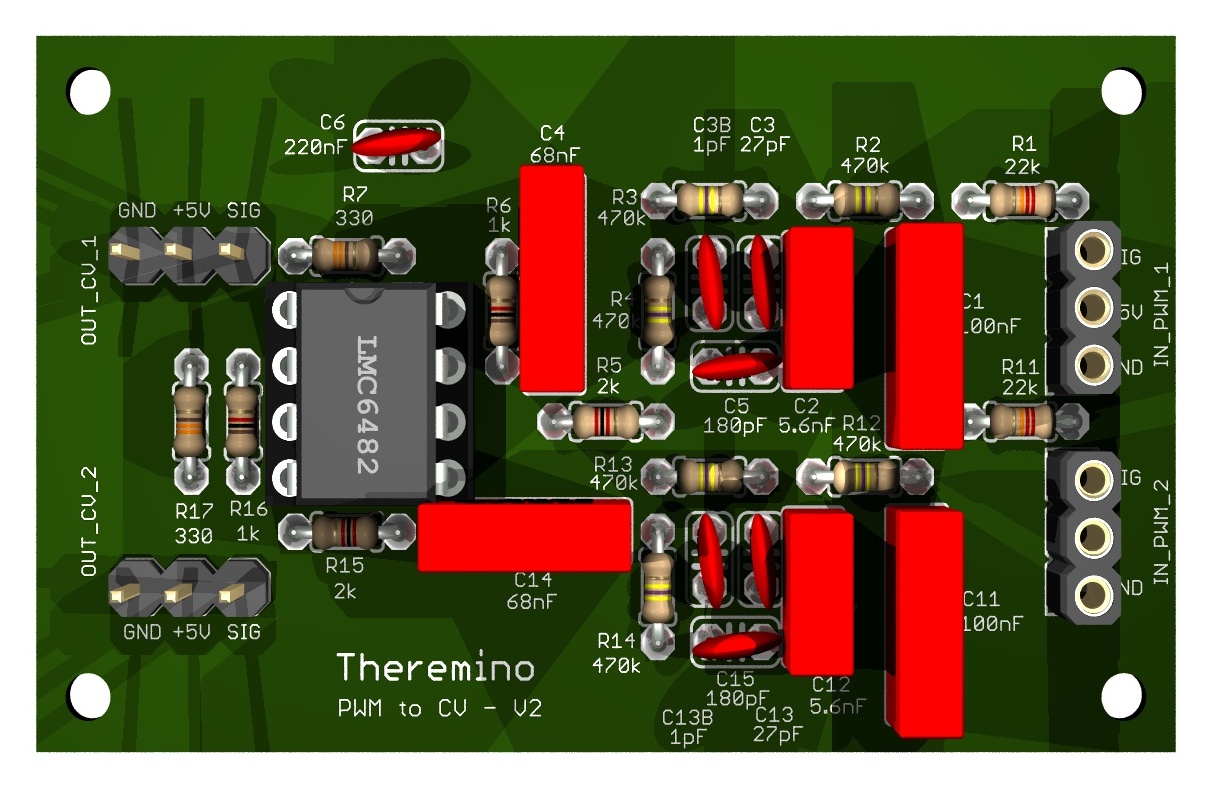
The Theremino engineers designed a special card to be used as PWM to MIDI converter, but only the DIY design project and schematics exist.
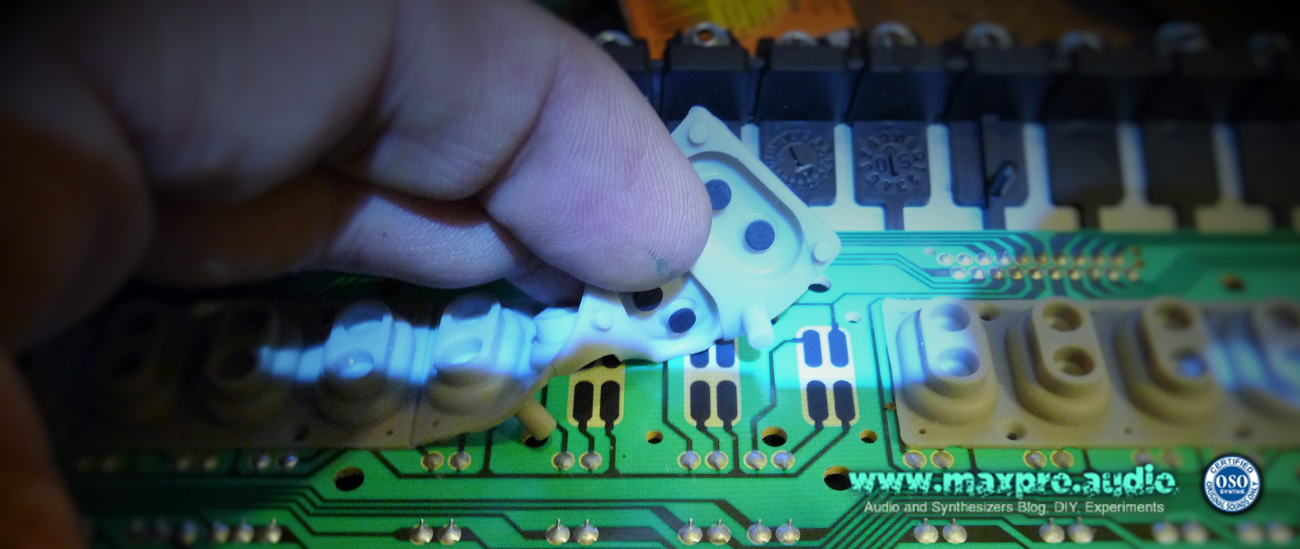
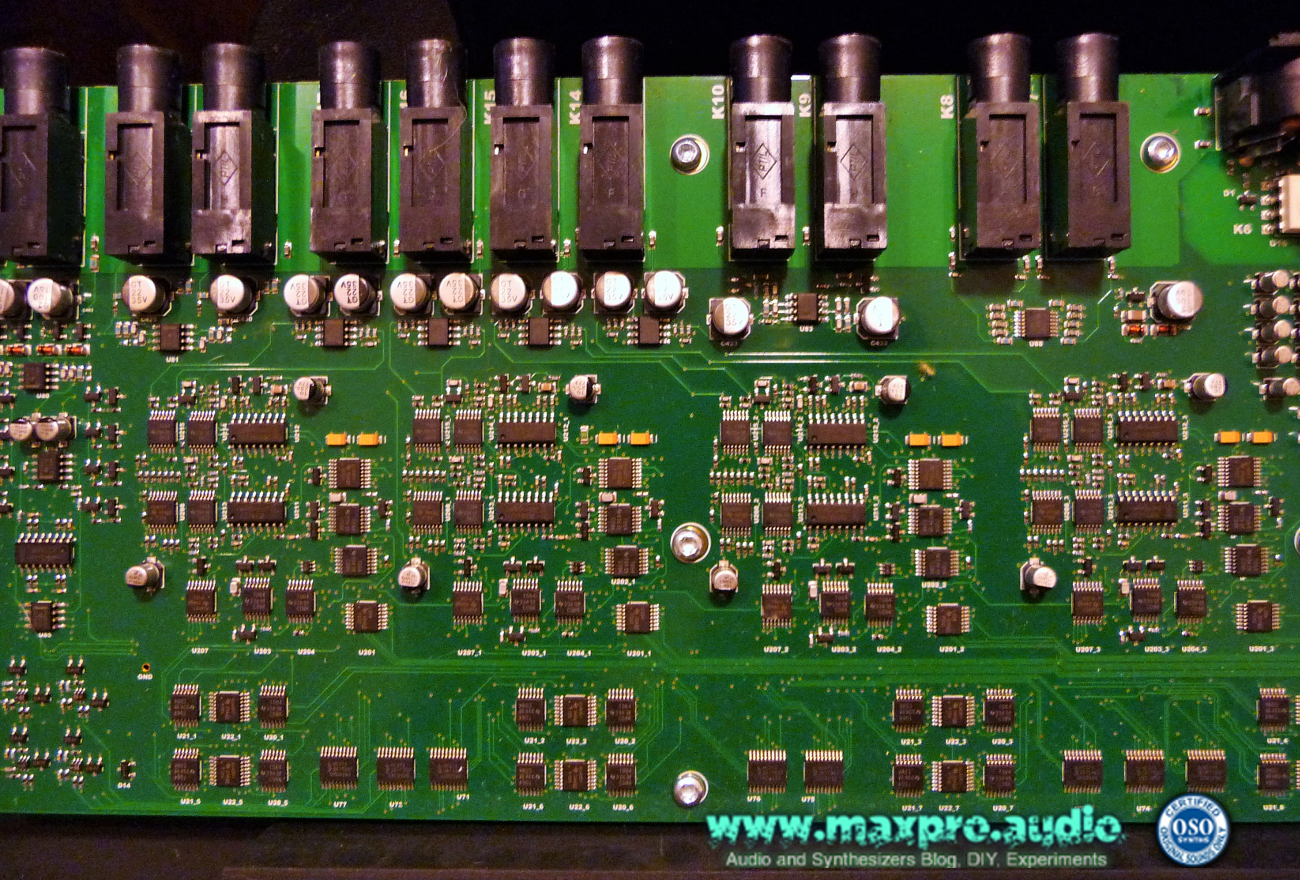
OK, a failure can happen even to the most modern synths, most commonly caused by a failing component, but finding a tiny polystyrene pellet right inside the contacts of my Elektron Analog Keys keyboard, has been really surprising. The small fluffy ball, found the way through, still in the production phase I guess, as when I opened the keyboard assembling all looked clean and the rubber tops were well sealed. As the warranty had expired already, I had the perfect excuse to check what was inside the only of my “unexplored” synths.
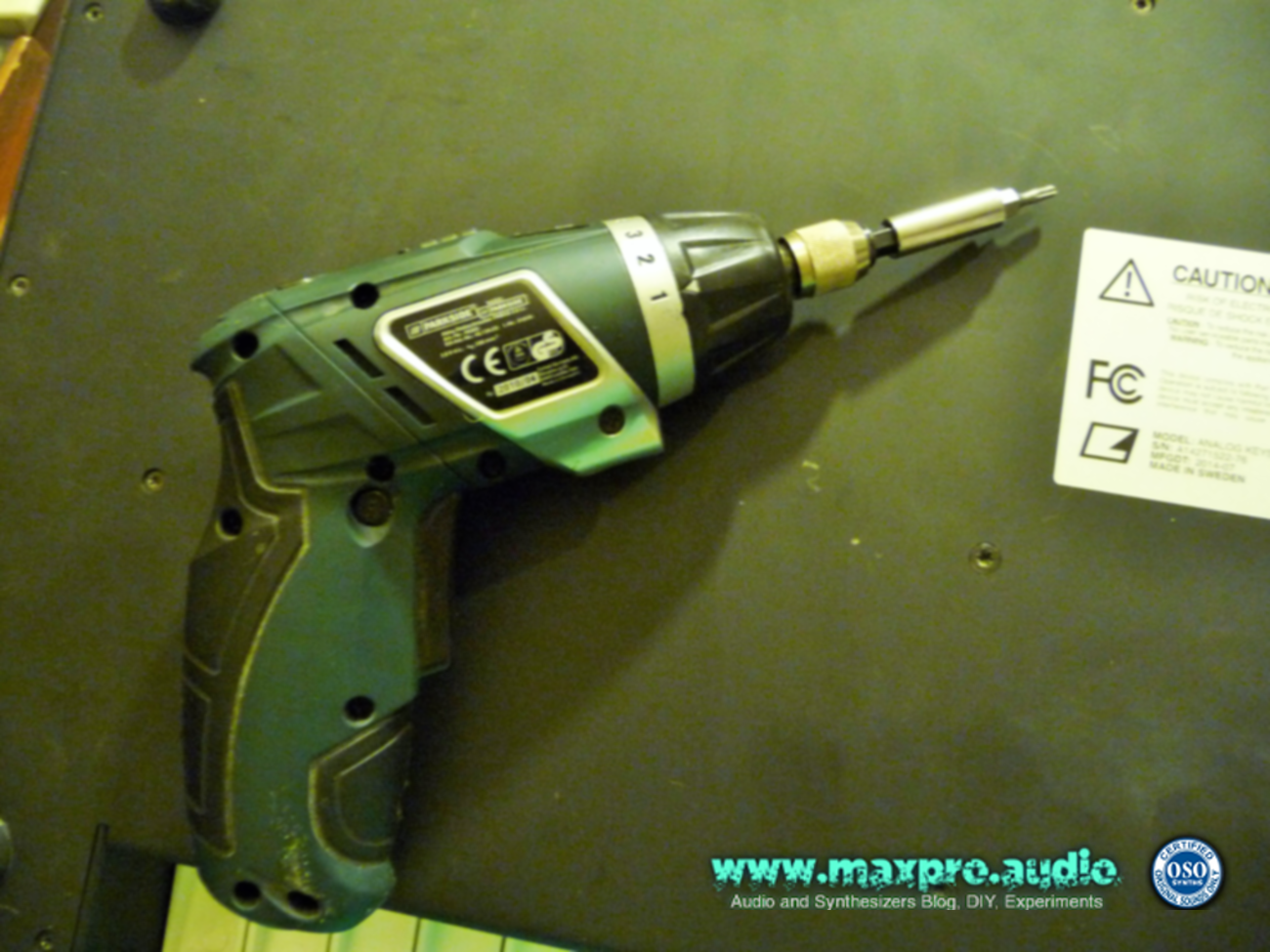
There are plenty of tiny screws to have access to the “insides”, better using a powered screwdriver.
Keyboard assembly
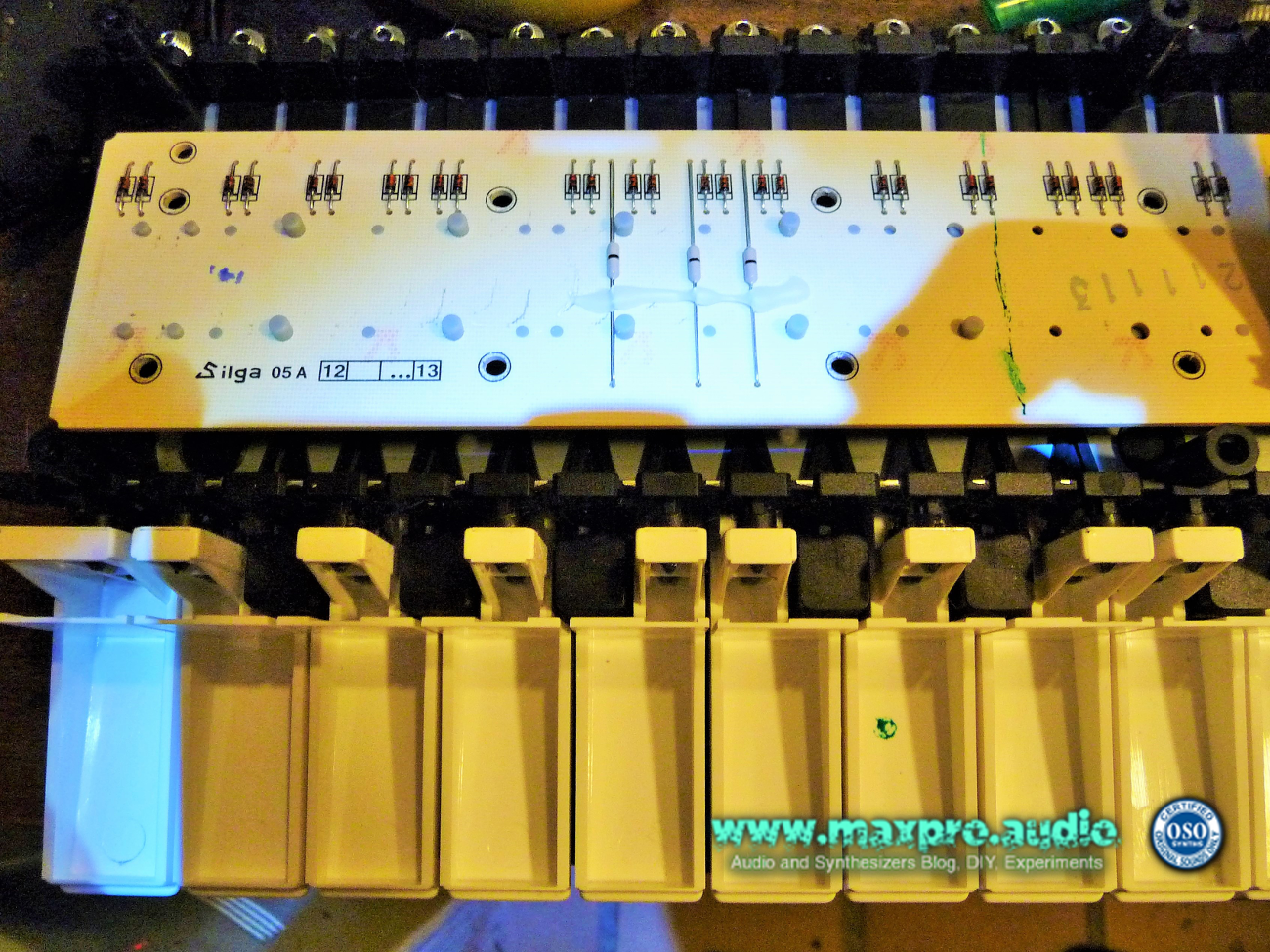
Keyboard PCB
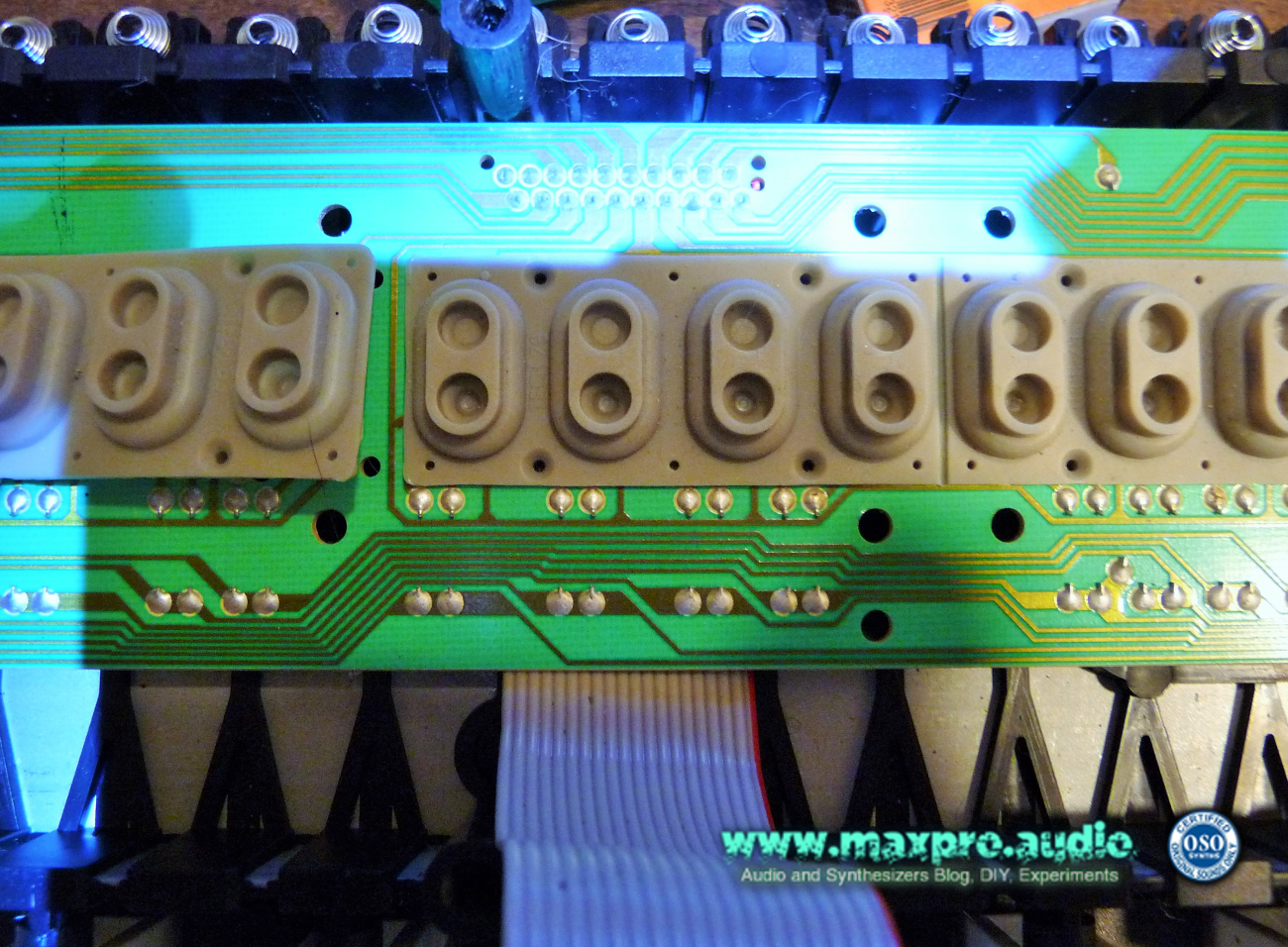
Contact pads
Under the contact pads is where I found the small pellet
Simply removing it and assemble all parts back, the synth’s keyboard returned to working smoothly.
For “The Dark Side”, I mean the real nightmare always lurking, while playing with vintage machines: Their tendency to break apart, often in the middle of an important session.
Always the best option, if possible, is to be able to do some small fixes in “DIY mode”, to save money and have the repair done promptly. The older the machine, the easier the repair is, usually. This is valid, if some rare parts availability, doesn’t interfere in the logic.
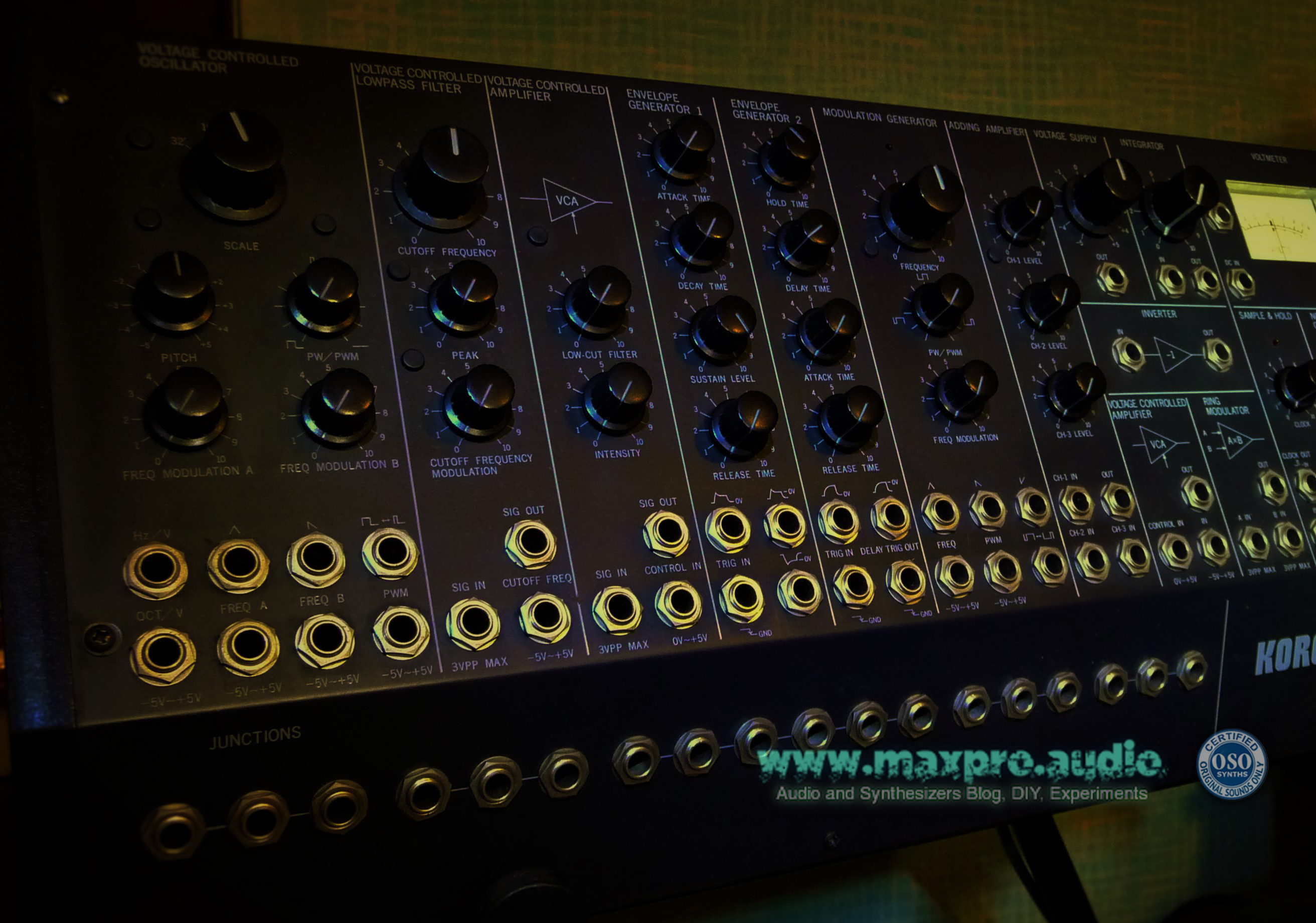
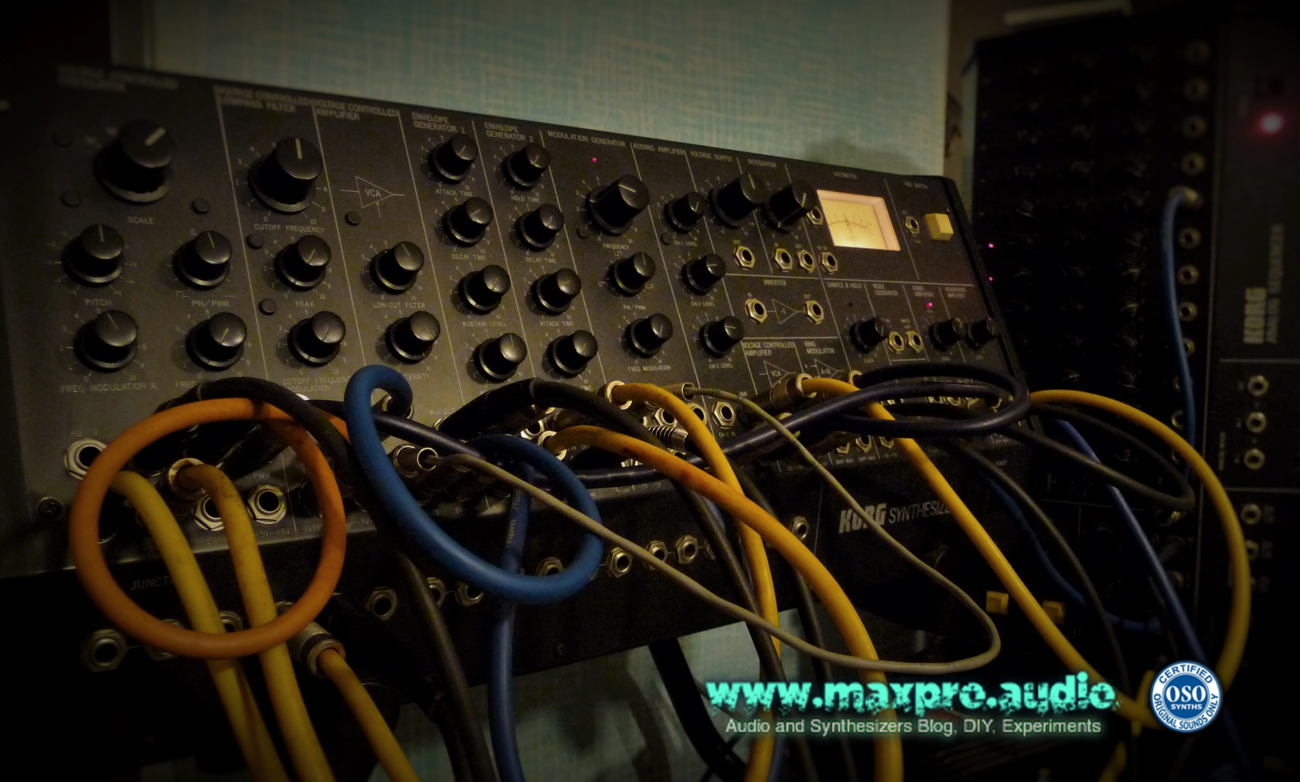
Doing some tests recently, I found that the auxiliary VCA section of my Korg MS-50, had one of its jacks broken inside. The plug was not kept in its place, like if there was nothing inside to retain it. I suspected the positive pole plate got broken.
Good occasion to open up the synth and look what’s inside ;)
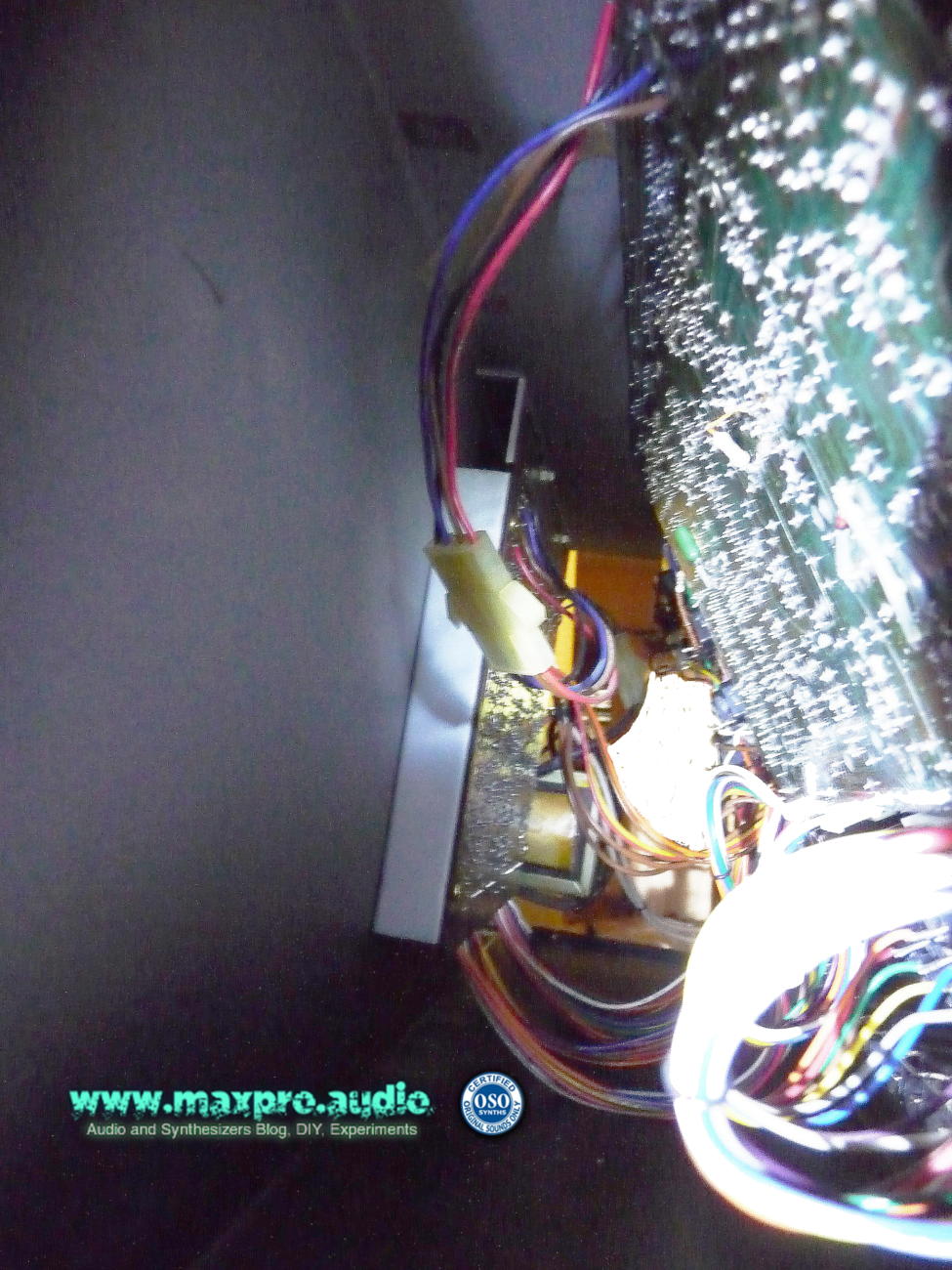
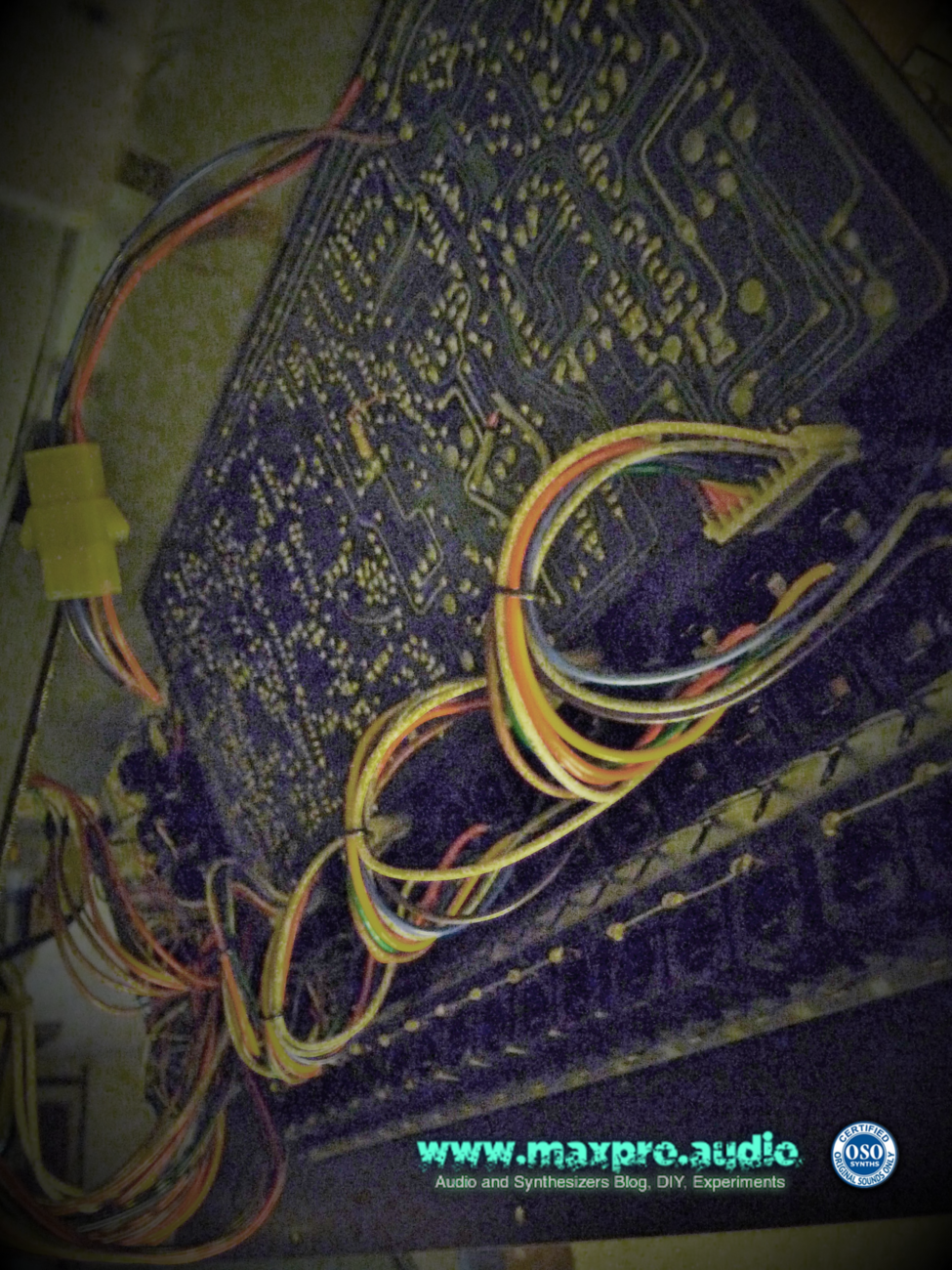
As soon as I unscrewed and removed the later panels, I remained impressed by the fact that in the interior of its panels the Korg MS-50,..ehm…IT’S EMPTY! :D It’s pretty impressive how Japanese technology was advanced, considering that this synth was in production, since 1979.
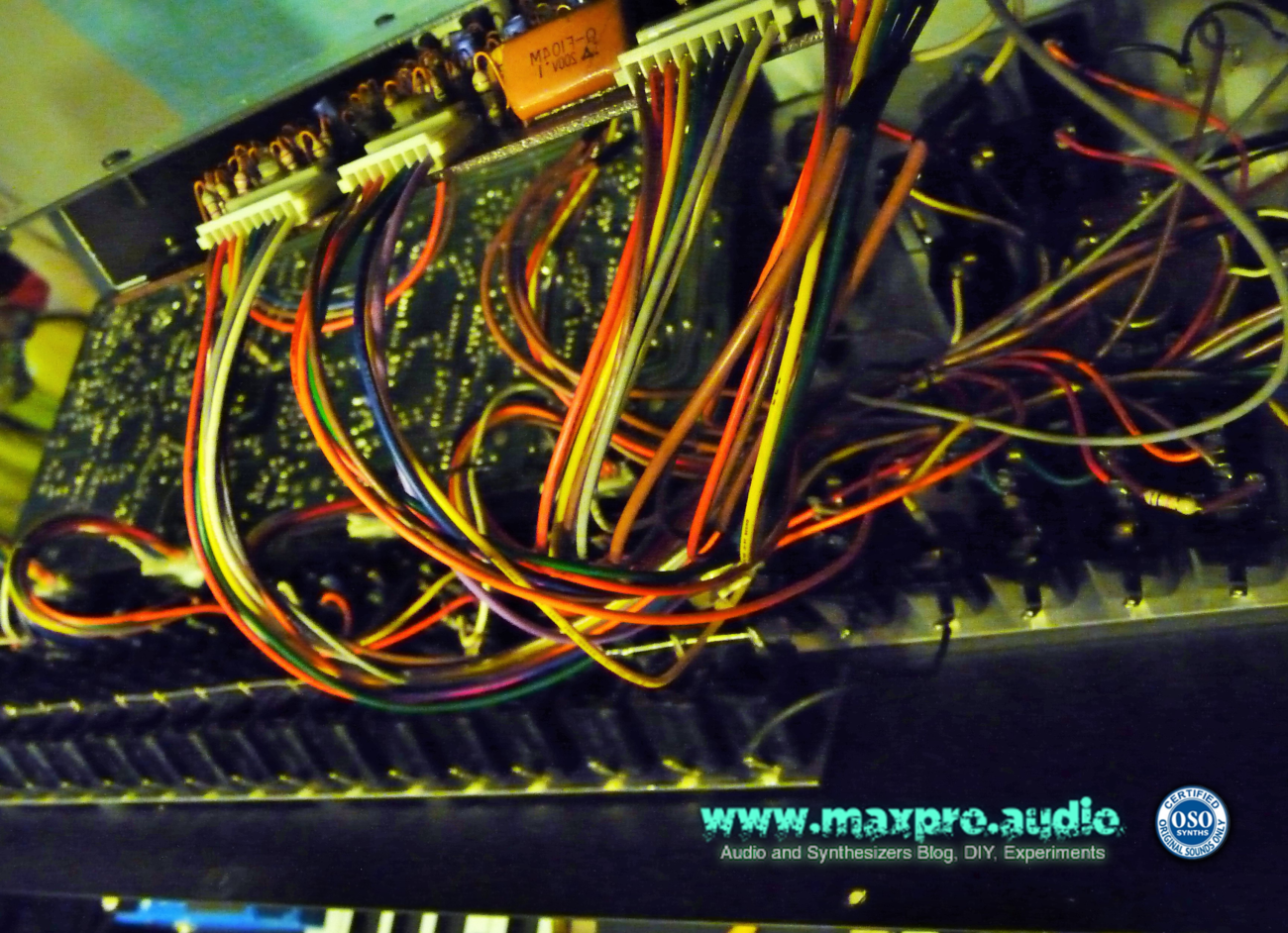
In the interior of the Korg MS-50, there are just a couple of thin PCBs, plus the PSU board.
What occupy much place, are the plastic slots for the jacks metal connectors plates.
The only thing really modular to me, is the placement of the jacks in the front panel, simulating the modules of a real modular synth. Modules can be connected through external connections only , same as a modular and not as the rest of the MS series, where some internal patching is placed already.
This not complete modularity, can look a bit suspicious by the most purists, but the sounds that this machine is capable to create are fantastic, even with it’s limited single oscillator configuration.
The Korg MS-50 have been pictured in Aphex Twin studio and should have been used by The Chemical Brothers.
REPAIR
Inspecting the interior, (with major relieve) I discovered wasn’t necessary to disassemble the whole synth, as removing the main PCB from the front plate, must be a really tedious process, considering all the jack bolts, to unscrew.
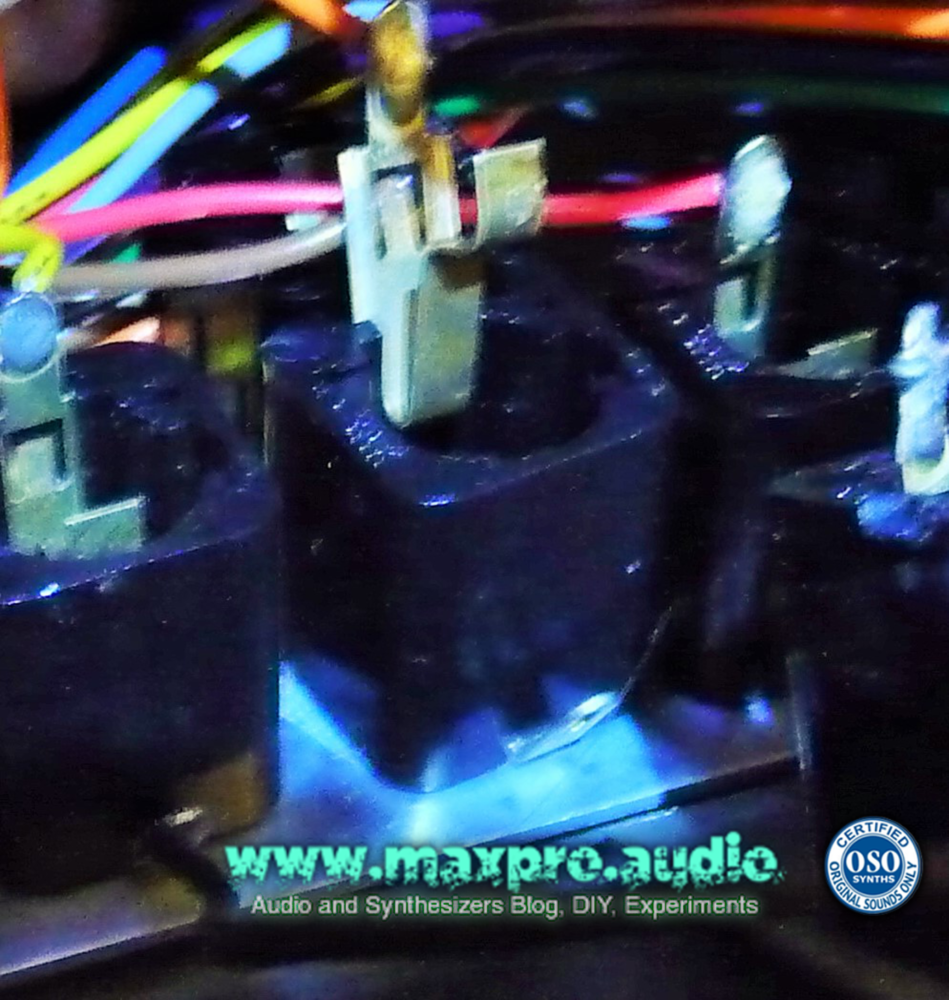
The cause of the fail for the broken jack, resulted in being the connector plate of the + polarity, that I found off its slot.
MS-50_int connector fail
Just some glue solved the problem, a much easier solution than what I thought was necessary, at the beginning.
TEST DRIVE
To test the VCA repair, I decided to make a demo, squeezing from the Korg MS-50 single oscillator, all its waveforms. I triggered them from its two Envelope Generators and a Korg SQ-10 Analog Sequencer that plays the sequence.






 Elektron Analog Keys PCB