

Updated February 27, 2026
Refreshed the English for smoother reading while preserving the original spirit, personal story, and technical details.
Note on specs: The 72 dB dynamic range figure is quoted directly from the 1982 E&MM magazine article for this DIY project. In practice (with 1980s-era 8-bit ADC hardware and no advanced companding), real measured signal-to-noise often landed closer to 50–55 dB, giving the characteristic hiss and lo-fi charm that makes the Powertran so appealing today. Planning fresh OSO audio demos soon (e.g., freeze loops, beat repeater tests). Stay tuned!
Refreshed the English for smoother reading while preserving the original spirit, personal story, and technical details.
Note on specs: The 72 dB dynamic range figure is quoted directly from the 1982 E&MM magazine article for this DIY project. In practice (with 1980s-era 8-bit ADC hardware and no advanced companding), real measured signal-to-noise often landed closer to 50–55 dB, giving the characteristic hiss and lo-fi charm that makes the Powertran so appealing today. Planning fresh OSO audio demos soon (e.g., freeze loops, beat repeater tests). Stay tuned!
I’m very excited to start writing about this delay processor — a piece that, I believe, deserves more words, as I couldn’t find much written on it. The reason it’s not popular isn’t its low digital resolution or high noise level, but simply because it was never produced in series.
The Powertran DDL came out in 1982 as a DIY project, published in the popular electronics magazine Electronics & Music Maker. As a result, only a small number of units were ever built. The project was developed by electronic designer Tim Orr, famous for his work on EMS synthesizers. The idea was to give wider access to the new digital technology, which until then had been extremely expensive and limited to big studios.
http://www.muzines.co.uk/articles/digital-delay-effects-unit/3714
I’ve been lucky enough to have fun with three different Powertran units over the years, each one a bit different from the others. Being a DIY project, they all had some modifications, like optional CV/Gate or additional knobs/switches.
The first unit I had was borrowed — a friend kindly left his Powertran in the studio, and it stayed with me for several years. His music was more focused on acoustic instruments, so he wasn’t using it anymore. Those were times when a dirty digital sound wasn’t appreciated much, and only a few bit-reduction plugins like Digidesign Lo-Fi existed. My friend’s Powertran had voltage control too — samples could be played from a keyboard through a MIDI/CV interface — and its dirty 8-bit sound reminded me a bit of the Emulator that Paul Hardcastle used in “19”, a song I’ve loved so much. The Powertran became the crazy spice for almost anything experimental I was doing, until I moved the studio to another country and had to give it back.
My current Digital Delay was bought on eBay in a lucky bid a few years ago, as very few units were still around. Unfortunately, my second unit — bought in the UK in 1999 — died after a few years of use, and I couldn’t go without a DDL!
The Powertran Digital Delay Line front panel is pretty simple and there’s nothing surprising. Apart from the time selector switches (the same as on the MXR we’ve already seen in a previous post), it’s straightforward.
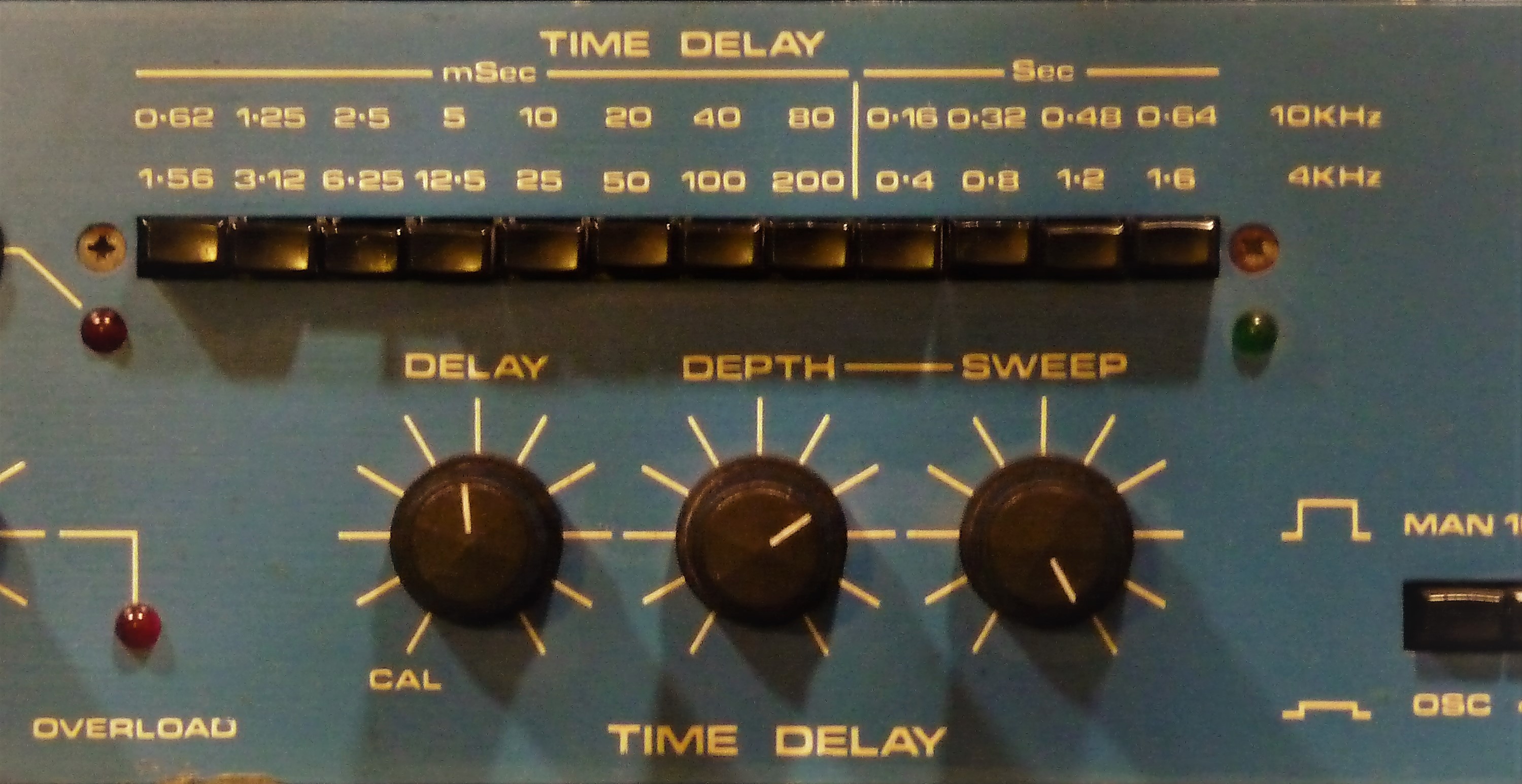
The Time Delay buttons always select multiples of the original tempo. If the delay is in sync with the track tempo, pushing different switches gives a very fashionable beat repeater effect today — where, for example, a loop speeds up or slows down but always stays in sync with the song. Some machines, like the Powertran, had a freeze button so the sample could be repeated without decaying — just like a sampler.
Specifications:
“Digital encoding for studio quality results. Time delays from 0.625ms to 1.6 seconds. Produces all popular time delay effects: Phasing, Flanging, ADT and chorus, Echo (including “freeze” for infinite repeats), Time domain vibrato, etc.”
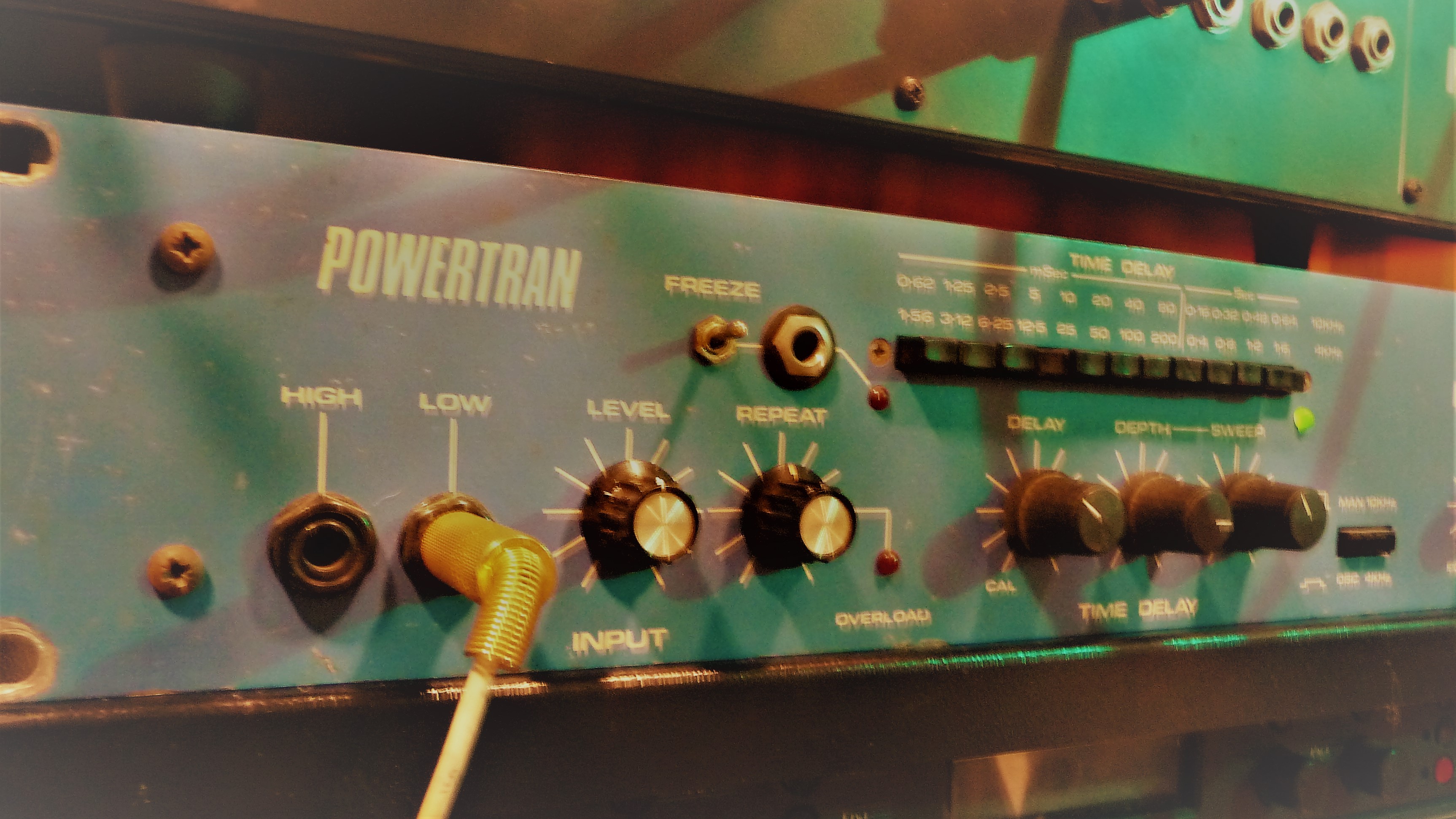
The Powertran Delay has a delay time of 0.625ms to 0.64s at 10kHz bandwidth, while it has 1.6ms up to 1.6 seconds at 4kHz. These times can be halved using the delay knob. The modulation LFO has a range from 0.025Hz up to 17Hz and a triangular waveform.
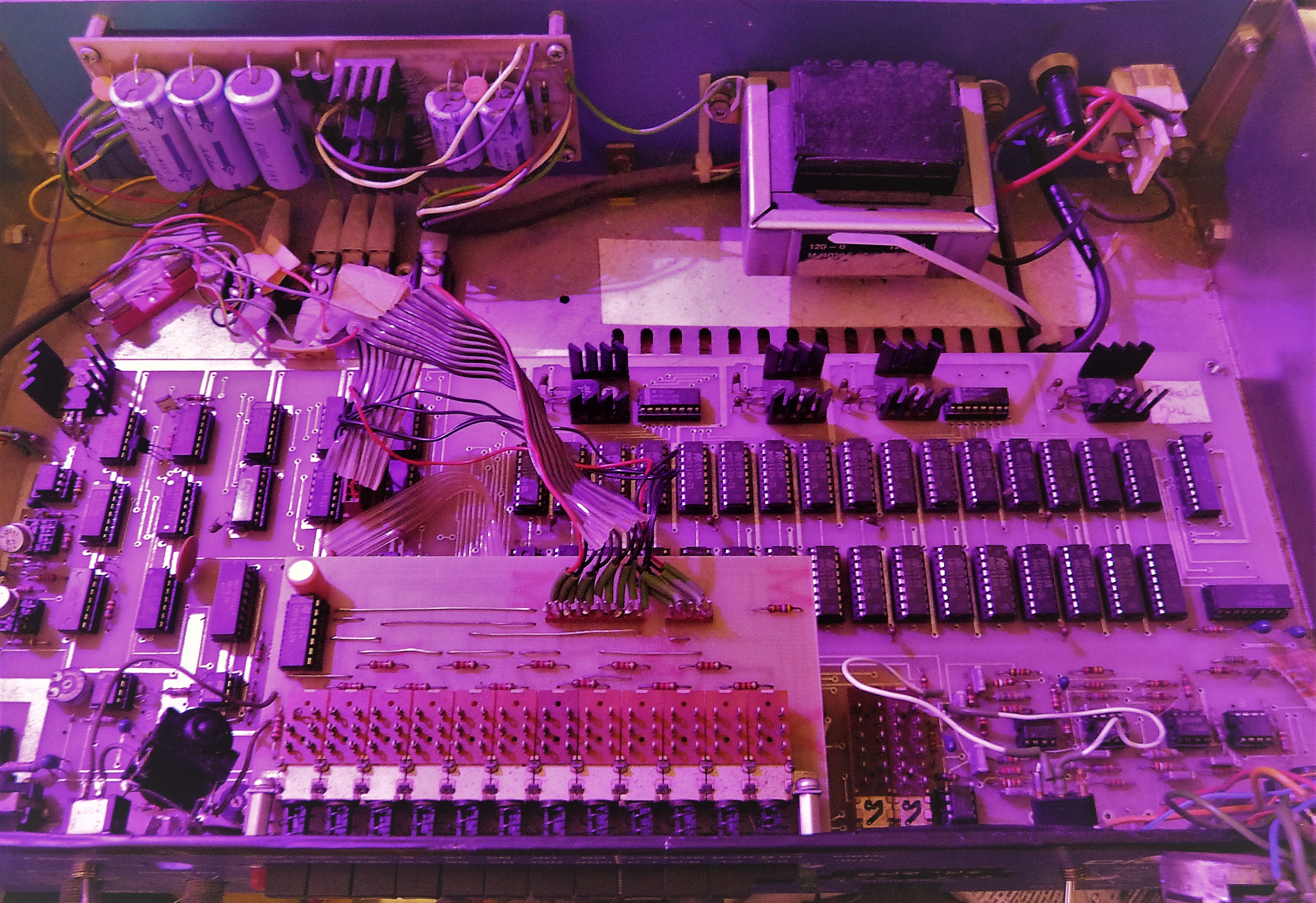
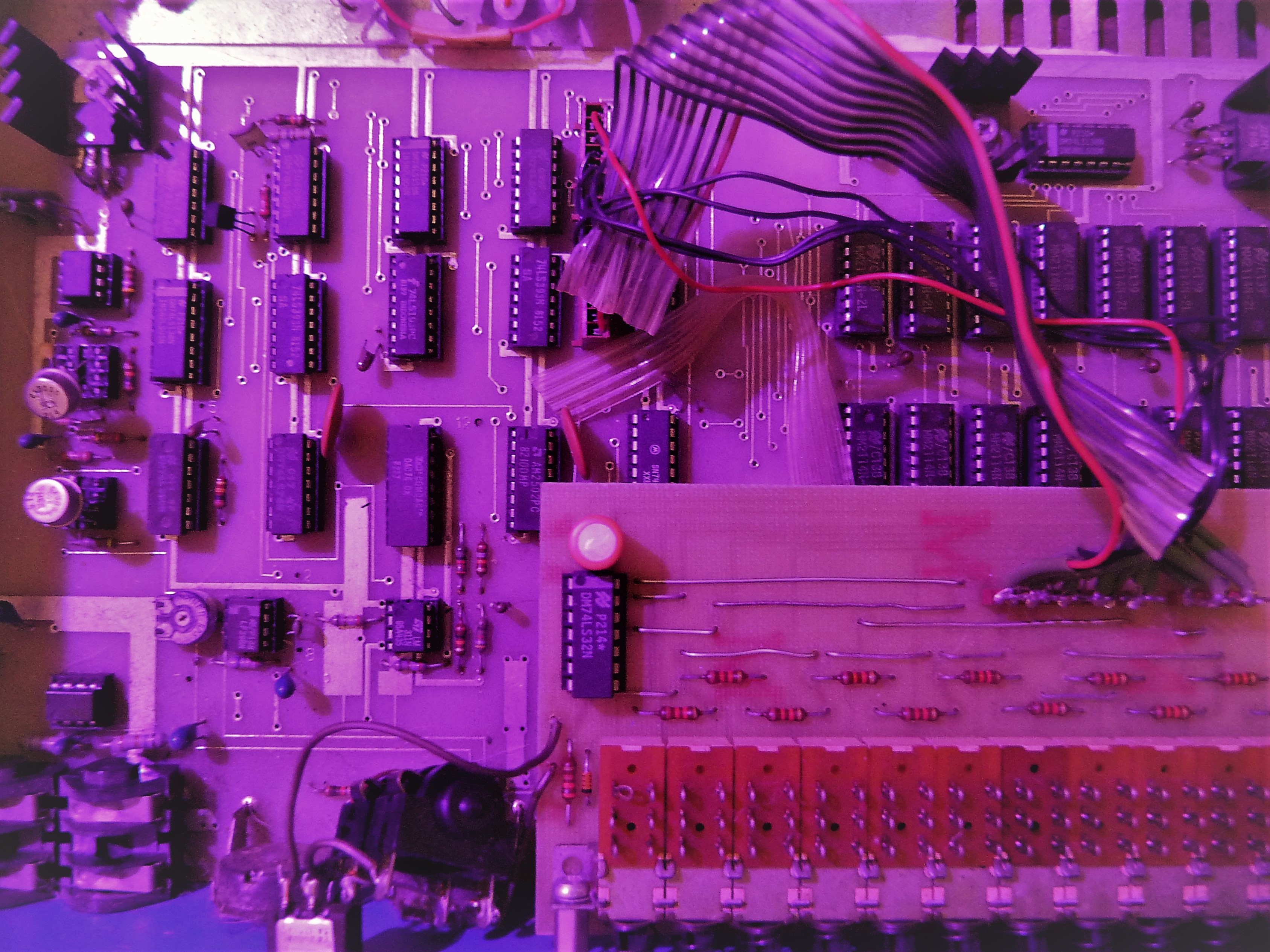
The input signal, once amplified, is passed through two switchable HPFs at 4kHz and 10kHz, working as anti-aliasing filters. The ADC analog-to-digital converter is an 8-bit one. The dynamic range of the Digital Delay is 72dB. The RAM memory is 16K bytes.
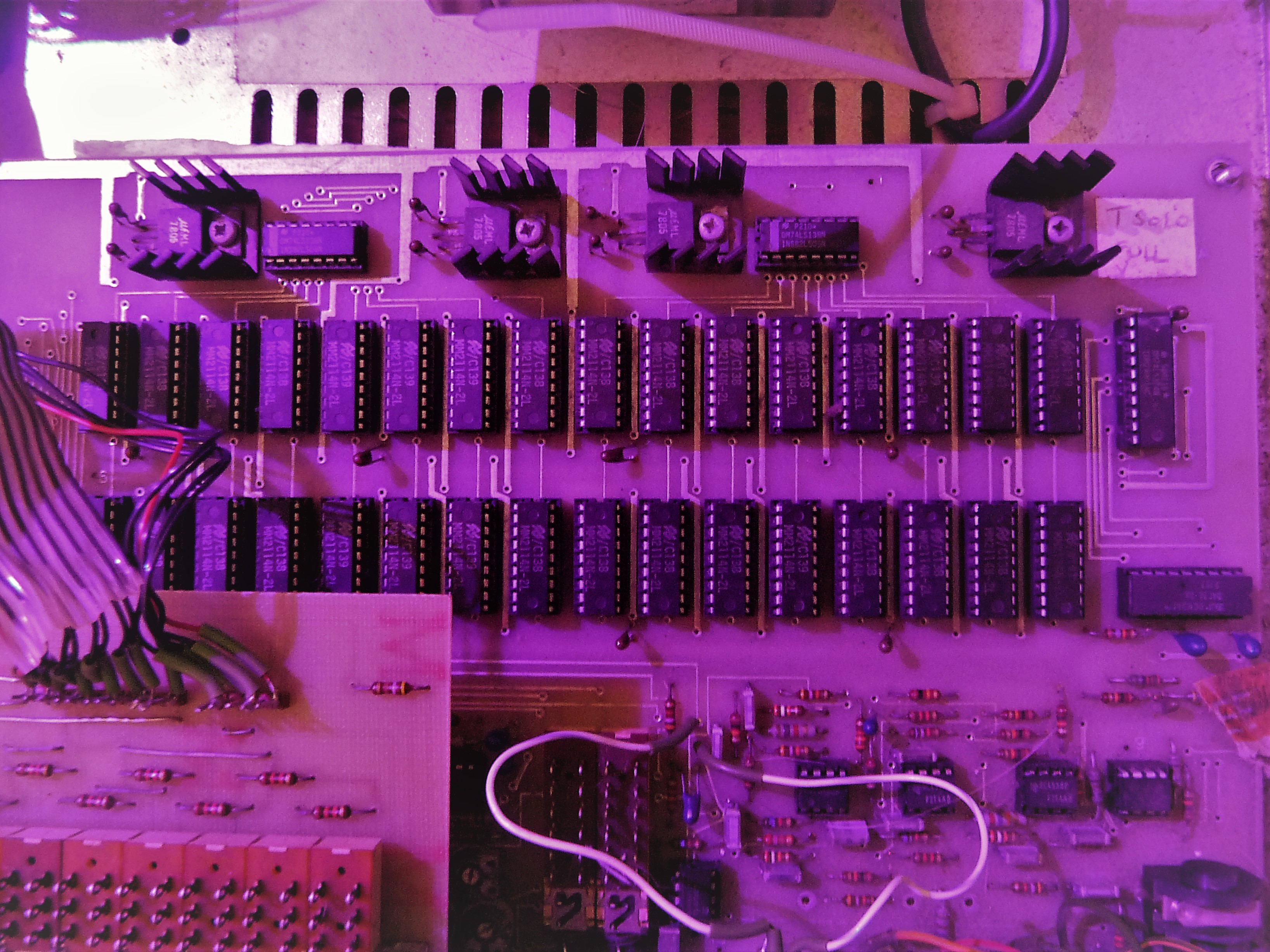
Here are some examples of the crazy effects obtainable with this processor:[Keep your existing audio descriptions/examples or update embeds if you have new ones]
Interesting links:
Free impulse responses from Floaudio: https://floaudio.bandcamp.com/album/flo-audio-x-powertran-digital-delay-line
https://bugbrand.co.uk/Powertran_Digital_Delay_Line.htm
http://www.loopers-delight.com/tools/powertran/powertran_review1.html
http://www.milton.arachsys.com/nj71/index.php?menu=2&submenu=6
Procrastination, heh heh just got that one:)
I remember thinking as a kid that it must have been a great machine, just because the name sounded so awesome in a ‘Terminator’ kind of way.
But it does actually sound pretty good too, nice and clean, although I don’t mind delays sounding dirty lol
Cheers for the article!
:D Thanks Spiralizer! True, the name sounded Sci-Fi!
I loved my Powertran! I used it live with the band, processing vocals and making funny noises. The “under the hood” UI was great. You could madly punch the time buttons while sweeping the clock speed and toggling freeze. While far from hifi, its sound colouration was pleasant. I built it from the kit, worked straight off and the first thing I did was freeze an “Ah” and do a version of Oh Superman on Portastudio!
Thanks for your comment, a pleasure to meet one of the builders of the Powertran kits, on those times you were real pioneers of the digital world.
I agree, the “time delay” switches “mad punching” is the real fun of the machine and processing drums, instant DnB! :D